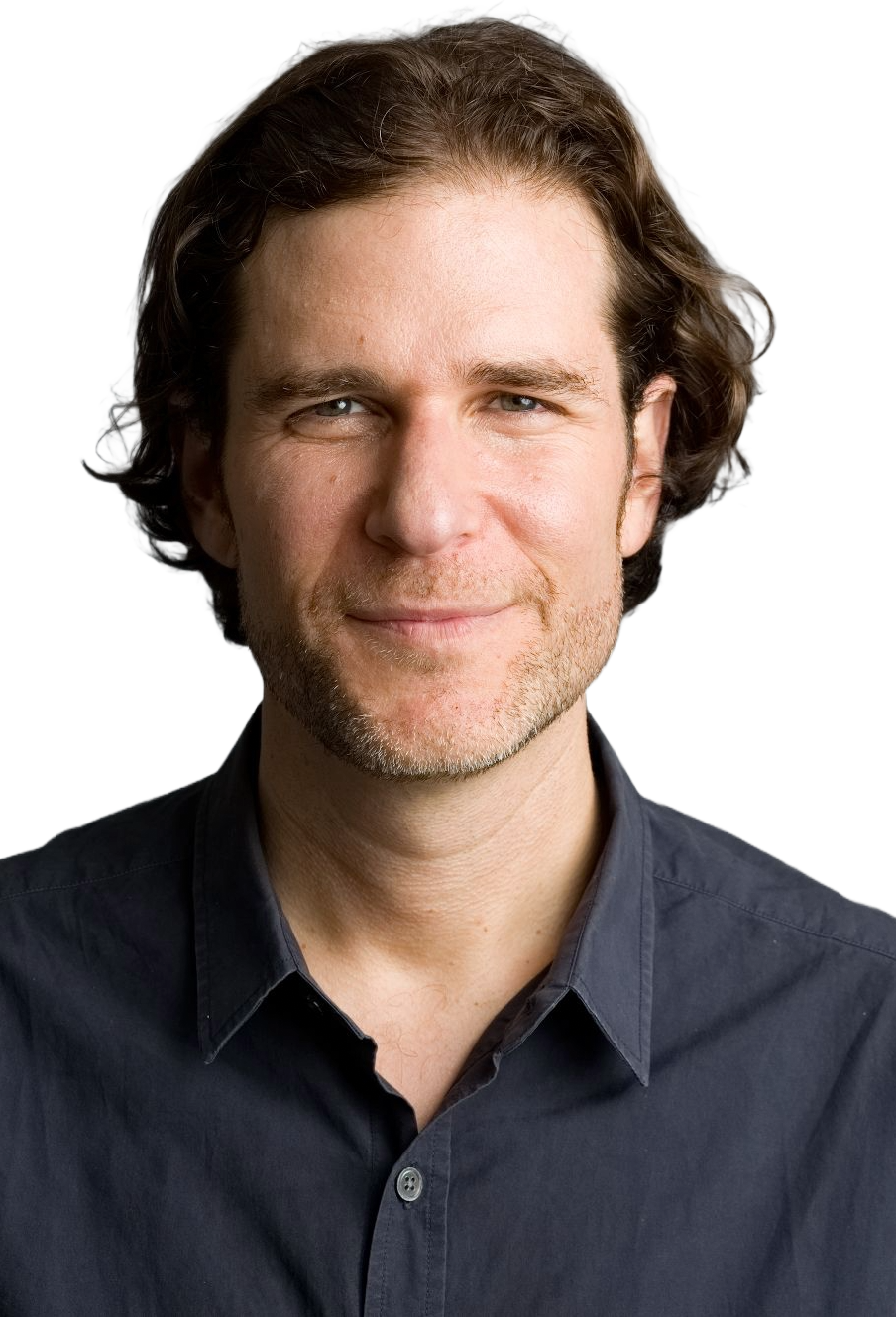
Michael Margolis
CEO, Storied; Author, Story 10X
Michael Margolis is the CEO of Storied and the author of Story 10X and Believe Me. Over 22 years he has trained product, data, and go-to-market teams at Google, Meta, Microsoft, NASA, SAP, Salesforce, and Uber on how to build narrative that drives investment, alignment, and executive buy-in. He developed the SFB Narrative Method and the Influence Archetype Assessment, and began his career co-founding two social enterprises before creating his own discipline around the structures and mechanics of influence at scale.
· 47 min
Michael Margolis has spent 22 years decoding how narrative drives investment, alignment, and influence inside the world's most complex organizations. He draws a sharp line between storytelling and narrative, a distinction 99% of storytelling books miss, and explains why leading with data is often the wrong opening move. He introduces the SFB Narrative Method for building an undeniable description of the future, and breaks down three influence archetypes and what each needs to do differently to bring stakeholders along.
- Book Story 10X: Turn the Impossible Into the Inevitable — Michael Margolis
Michael's own framework and the definitive guide to the SFB Narrative Method. The practical guide to building narratives that drive investment and buy-in.
- Book The Hard Thing About Hard Things — Ben Horowitz
Michael cited Horowitz's observation that as a company grows, communications becomes its greatest challenge. The core argument for why narrative matters at scale.
- Book The Tipping Point — Malcolm Gladwell
Mentioned as a formative book that raised the right questions about how ideas spread, which sent Michael on his own search for the actual structures and mechanics behind influence.
- Book Unleashing the Ideavirus — Seth Godin
Cited alongside The Tipping Point as a book that hinted at how ideas and narratives spread at scale, and helped spark Michael's obsession with the underlying structures of influence.
- Book Believe Me — Michael Margolis
Michael's first book, which laid the groundwork for his thinking on narrative and the mechanics of how people come to believe in an idea.
Rahul Abhyankar [00:00]
Michael, I'm so excited to have you on Product Leader's Journey. Thank you so much.
Michael Margolis [00:04]
Thanks, Rahul. It's great to see you.
Rahul Abhyankar [00:06]
I share two areas of passion with you. One is stories. One of the compelling reasons to start this podcast was my curiosity about the stories leaders have as they go through their careers. And the second is chocolate. So let's start with the important one first.
On your LinkedIn you say you started a secret society for chocolate lovers. What's the story behind that?
Michael Margolis [00:38]
Some people collect wine. I collect chocolate. Rare, single origin, craft chocolate from all around the world. I literally have a second fridge just for chocolate. And I needed a way to pay for my expensive habits, so I started to traffic in kilos of it.
What I discovered was the chocolate secret: when you bring people together, chocolate always tastes better when you share it with friends. And more importantly, chocolate activates oxytocin, literally the belonging molecule. So I started hosting chocolate tasting events and saw this incredible way that people would open up and connect with each other. It turned into a signature thing for me.
The way I collect and introduce people to chocolate is the same way you might experience a rare vintage wine. We might sample a Fruition bar, a 74% Madagascar bean from the Sambirano Valley, Atkinson's Farm, with bright red fruit and citrus. Very different from a Luisa Abram Brazilian wild cacao, which literally tastes like pineapple upside down cake. Tropical fruit on the front, moving into butterscotch and rum, then cinnamon, cardamom, and a tobacco finish with strong cocoa dust. I teach people how to follow the story as it unfolds. We could spend the next hour just on chocolate.
Rahul Abhyankar [03:01]
You've done significant work helping companies tell better narratives. But I want to first go back to your journey. You started out with a volunteering platform for universities. How did that come about, and how did you pivot to what you're doing today?
Michael Margolis [03:25]
Let me set something up first. When I say storytelling, this isn't jazz hands storytelling. This isn't the Moth, how to tell a better anecdote. When I say storytelling, this is about the narrative that drives investment, that gets buy-in with executives, that turns data into a story, that allows you to manage up, down, and across when you're working on something complex, technical, and hard to explain. We're all dealing with this incredibly rapid pace of change where things are moving so fast we don't know what story we're in anymore.
What we do at Storied is teach people how to think in narrative. As a PM, you're taught to demonstrate rigorous thinking. We're being asked to write more frequently: memo culture, internal strategy docs, executive presentations, TLDR summaries, status updates. How we write, how we speak, how we convey our ideas: that is the defining factor of whether we are driving velocity forward or dealing with drag and friction.
Rahul Abhyankar [05:07]
I'm glad you made that distinction. When we think about storytelling, what gets glorified is the telling aspect and the storyteller. You've already separated story from narrative.
Michael Margolis [05:23]
Yes. And 99% of storytelling books and trainings do not make this distinction. Yet in my experience, it is the number one distinction that unlocks power and influence at scale. We'll come back to story versus narrative. It's worth staying for.
I graduated from university in 1998 with a degree in cultural anthropology, no idea what I was going to do next. My dad sent me a magazine article and, in one of the rare moments I actually listened, I did a mini MBA summer bootcamp at Dartmouth's Tuck School of Business. Half the class were recent hires at McKinsey and Goldman Sachs, liberal arts grads being sent to learn the language of business. That was one of the most decisive choices I made early in my career.
From there I joined Volunteer Solutions, the first nonprofit to win the MIT $50K entrepreneurship competition, as head of development and communications. Then I co-founded and ran City Skills, focused on the digital divide. Back in the late 90s, half a million tech jobs were going unfilled. We saw urban communities as an untapped source of talent and worked on building workforce development pathways.
What made it or broke it for individuals making that leap wasn't the hard skills. It was the soft skills. Same is true for PMs. As you progress from IC to specialist to lead to director to VP, you're judged less and less on technical competencies and more and more on influencing competencies.
By age 22, I was funded by the Ford and Rockefeller Foundations, featured in Fast Company, working with leading tech companies. By age 24, epic fail. That failure sent me on the obsessive quest: why is it so hard to convey a world-changing idea? Why is the story of innovation and disruption such a challenging thing to tell?
I got resourceful. Created my own learning agenda, hung out my shingle as a consultant, and found ways to create value for people while I decoded and developed these methods. Twenty-two years, 350 organizations later.
Rahul Abhyankar [10:33]
Two things I want to go deeper on. First: the language of business. What do you mean by that?
Michael Margolis [11:02]
My number one career advice: learn the language of the world you want to be a part of. When you speak that language, you signal that you belong. A job interview, a romantic date, a sales meeting: all are interactions between people to see if we speak the same language. If you don't, you will have a very hard time moving that relationship forward.
Part of my gift is that when I work with an organization, I quickly learn their organizational language system. When I do a keynote or training, the feedback I often get is: how long have you been part of our company? I take all the strategy docs, distill them, and reflect them back.
Rahul Abhyankar [12:26]
A product manager has to be multilingual. The language engineers speak around technology. The language of business, understanding what moves the needle. Finance. Marketing. Sales. Each is a different dialect.
Michael Margolis [13:27]
Exactly. And within each, there are further subsets. The deeper realization is that what we want to get good at is learning the meta language of humanity, which is narrative. Every experience, every object, every relationship is stored in our mind with a story attached. When we make a business case, we're building a narrative. Inherent in that narrative is a logic model describing how the world works, a vision of where we want to go, and the journey needed to get there.
That's based on a core precept: the narrative is upstream of any other problem or challenge you face.
Rahul Abhyankar [14:42]
Say more about that.
Michael Margolis [14:51]
If you think of the thrash, the conflict, the frustration organizations experience every day. That's not an execution problem. All the phrases we reach for: how do we get everyone singing from the same song sheet, we need to create alignment, we don't have aligned incentives. All of this is a process of framing language so that everybody can find themselves in the same story.
Rahul Abhyankar [15:22]
The second thing I want to drill into is influence at scale. You started with the distinction between influencing and informing.
Michael Margolis [15:29]
The first distinction to name is the difference between informing and influencing. We so often get caught informing others instead of influencing. Informing is describing what you've done and how you got here. Influencing is describing where you want to go and what you need in order to get there.
Here's the counterintuitive part. We think storytelling is beginning, middle, and end. But in today's world of information overload and attention deficit, you have to start with the future first, not the past. Data is a story of the past. Disruption is a story of the future. Always start with the future first.
Once you've talked about the future, tell a love story about it. Frame things in a way that is positive, aspirational, and motivational, rather than describing the future based on what's wrong or broken.
Rahul Abhyankar [17:23]
You still have to bring data along though. Market size, growth rate. Those matter.
Michael Margolis [17:48]
Absolutely. One of our signature frameworks, the SFB Narrative Method from Story 10X, is how to build an undeniable description of the future. People have to see it and feel it in order to believe it.
See it is about zooming out, helping people see the big picture. What are the things that are possible now that weren't before? Opportunities, possibilities, context for change. When the world changes, we have to change our story to reflect that new world.
Feel it is zooming in. Get up close and personal: who is at the center of this story, what do they want, what gets in their way? Desires and dilemmas. This is how you humanize, how you create empathy.
If you get people to see it and then humanize it so they think, that's a real gap we need to close, now they will be begging you for the data to support the promise. Data might be king, but context and emotion are the queen. The queen should always go first.
People buy on emotion and justify through logic. But we all come in with a hammer: here are the facts, here is the data. That works when we already have shared problem definition. But when you're dealing with an ambiguous problem space, an ownerless problem, something your audience is complicit in. Leading with the problem is often dead on arrival.
Lead with the problem and the data, and people say: I don't agree with that conclusion. So instead of problem-solution, minus then plus, think possibility-obstacle, plus then minus. Start with what's right and possible. Once we agree we both want that future, then let's talk about what stands in the way.
Language is the biggest source of hidden friction we all face. This is why this matters.
Rahul Abhyankar [22:07]
When we focus too much on the telling side of storytelling, the focus becomes the teller's anxiety and credibility. When you talk about narrative, possibilities and obstacles, you're showing empathy to the listener. Talk about the psychology of the listener you're trying to influence.
Michael Margolis [22:44]
We very rarely truly listen. As we're listening, we're often listening to respond, to confirm, to control, some other agenda instead of truly having an open receptive field.
We teach five listening techniques. First: identify where does the person come to life, where is the energy? Second: where do you self-identify, where do you go yeah, me too? Third: listen for power words and phrases, the things that have reverb, that carry real meaning for that person. Fourth: listen for things that elicit questions, places where you're curious or confused. Pull on those threads. These techniques let you create better shared context and shared understanding.
Because everything we encounter, every email, every Slack message, every social media feed, is filtered through two questions: do I belong in this story? And where is this going, and do I want to go there? We call this the storytelling GPS. It's a location device and a transportation vehicle.
Rahul Abhyankar [25:26]
When trying to establish trust and influence, there's also the dimension of understanding personality and style, both yours and theirs. How does that play in?
Michael Margolis [25:42]
You can't influence and judge at the same time.
We're human beings. We judge all the time. But when you're narrating a story in your mind about who's right and who's wrong, the conversation is over before it begins.
A useful frame comes from Landmark: integrity is not a moral judgment. It's not right, wrong, good, bad. Integrity is simply this: is it working or not working? And if it's not working, what do we need to do to make it work? Value neutral. It's what we do in an effective retro: start, stop, continue.
Rahul Abhyankar [27:55]
Isn't integrity about alignment with values, where my actions, thoughts, and words are in alignment?
Michael Margolis [28:09]
That's a fair statement. Here's my observation: values don't scale.
Values are evaluative, binary by nature. As you scale, take Google's "don't be evil." By the law of large numbers, you'll have a group of people, including your own employees, who say this does not live up to their lived experience, because they're measuring it in this binary fashion.
So instead of values, I'm more interested in principles. Principles are ways of relating to each other. One operating principle at Storied is "own your experience." That enables coaching conversations. Values, on the other hand, we often weaponize: "you don't have integrity." What do I do with that? This is another example of how language can perpetuate the very conflicts we're trying to transcend.
Rahul Abhyankar [30:32]
When you say influence at scale, what does that mean specifically?
Michael Margolis [31:21]
Ben Horowitz in The Hard Thing About Hard Things says: as a company grows, communications becomes its greatest challenge. We are all struggling with version control. Things are moving so fast we don't know what story we're in anymore. Version control between leadership, mid-level managers, and ICs. Version control across functional disciplines. Version control through phase shifts.
Anytime you 2X revenue, user base, or headcount, you have to rebuild the plane while you're flying it. All of that is a communication challenge.
Back to influence at scale: you're judged less and less on technical competencies and more on influencing competencies. Very few people have been taught how to influence effectively in a non-adversarial way. Even positional authority doesn't make people listen and follow. There is a very high bar for what it takes to bring everyone along.
We've identified three natural styles of influence through our Influence Archetype Assessment.
Rahul Abhyankar [33:22]
What are the three archetypes?
Michael Margolis [33:26]
Number one: the Natural Promoter. About five to ten percent distribution in tech. The big idea people. They ooze charisma and can immediately move the room. Driven by getting to the future. Their kryptonite: they move too fast, skip details, and can be perceived as too destabilizing to organizational processes and structures.
Number two: the Quiet Maximizer. About thirty percent. Frictionless operators: Chiefs of Staff, heads of Strategy and Ops, but in any role. Driven by getting things done. Quite egoless. They don't want or need the credit. They love pulling the levers of people and process. Their kryptonite: cautious about overstepping, struggle to find their voice, allergic to anything that could be perceived as self-promotion.
Number three: the Precise Achiever. About sixty to sixty-five percent in tech. The technical subject matter experts. Driven by getting it right. All about excellence. Their kryptonite: they can underestimate the psychological and emotional safety needed to bring everybody along. So attached to being right that it comes at the sacrifice of being effective. Under stress they can be controlling or rigid. Their challenge is becoming more adaptive and learning how to create the emotional buy-in part of the journey.
Which one are you, Rahul?
Rahul Abhyankar [37:55]
I'd index more toward the Quiet Maximizer, getting things done and enabling others to do the same. My secondary would be Natural Promoter, understanding the bigger picture and helping others see it. But being in front of a large audience is where I burn calories.
Michael Margolis [39:24]
The next step is thinking about an important stakeholder you're trying to influence. What is their essential archetype? And based on that, what is their language of love, the way you need to orient your communications for them, given both who they are and where your own strengths and kryptonite lie.
Rahul Abhyankar [39:51]
This feels like a live therapy session. But it comes back nicely to the question about the psychology of the listener. When you're crafting a narrative, do people have to be creative?
Michael Margolis [40:35]
Not at all. It's a way of structuring your thinking. There is a mindset piece. Building a narrative requires a possibility mindset, the ability to see and articulate opportunities where others see limits. But the next part is just being a more rigorous thinker. Taking what's implicit and making it explicit. We often take for granted what everybody else most wants or needs to know.
It's a process of mapping, decoding, and assembling the building blocks onto a framework using the SFB Narrative Method. Then you build the full narrative that gets you investment, buy-in, or agreement. But understand that the narrative is a thesis with underlying assumptions. Like anything in product-led growth, you have to test and validate it. We teach a whole process for having facilitated conversations with key stakeholders to create the momentum of yes.
The purpose of a narrative is to describe the future in a way that is difficult, if not impossible, to reject. Undeniable. Irresistible. Irrefutable. You do this rhetorically by speaking to universal truths, collective motivations, and contextualizing to strategic business drivers and specific stakeholders. It's five-dimensional chess, but anyone can learn it.
Rahul Abhyankar [42:36]
A big part of this must be assumptions, the ones we all carry. How does a narrative surface those so you can have an effective conversation?
Michael Margolis [42:45]
Most relationships, personal and professional, break down because of unmet expectations. Most conflict, most breakdown, comes from people being held to a set of expectations that were never made explicit. You're holding me to expectations and standards we never created a shared agreement about.
We move so fast. We have these expectations and assumptions in our heads. Context collapse happens because people are operating from a different set. We never take the time to get on the same page, including stack-ranking our expectations in a way that is mutually value-creating. That is the deeper work of building a narrative where you can influence at scale.
Rahul Abhyankar [43:49]
Michael, so much to unpack here. Thank you for this wonderful conversation.
Michael Margolis [44:06]
My pleasure. And I'll close with this: as a product manager, you are the general manager of a feature, of a product, of an organization. It is your job to narrate the journey. If you're not doing it, someone else will. In reality, often no one does. That is why narrative is the number one competency product leaders have to develop in order to steer the ship and bring all the functional stakeholders along in a way that is mutually value-creating.
Rahul Abhyankar [44:29]
Phenomenal. Thanks again, Michael.