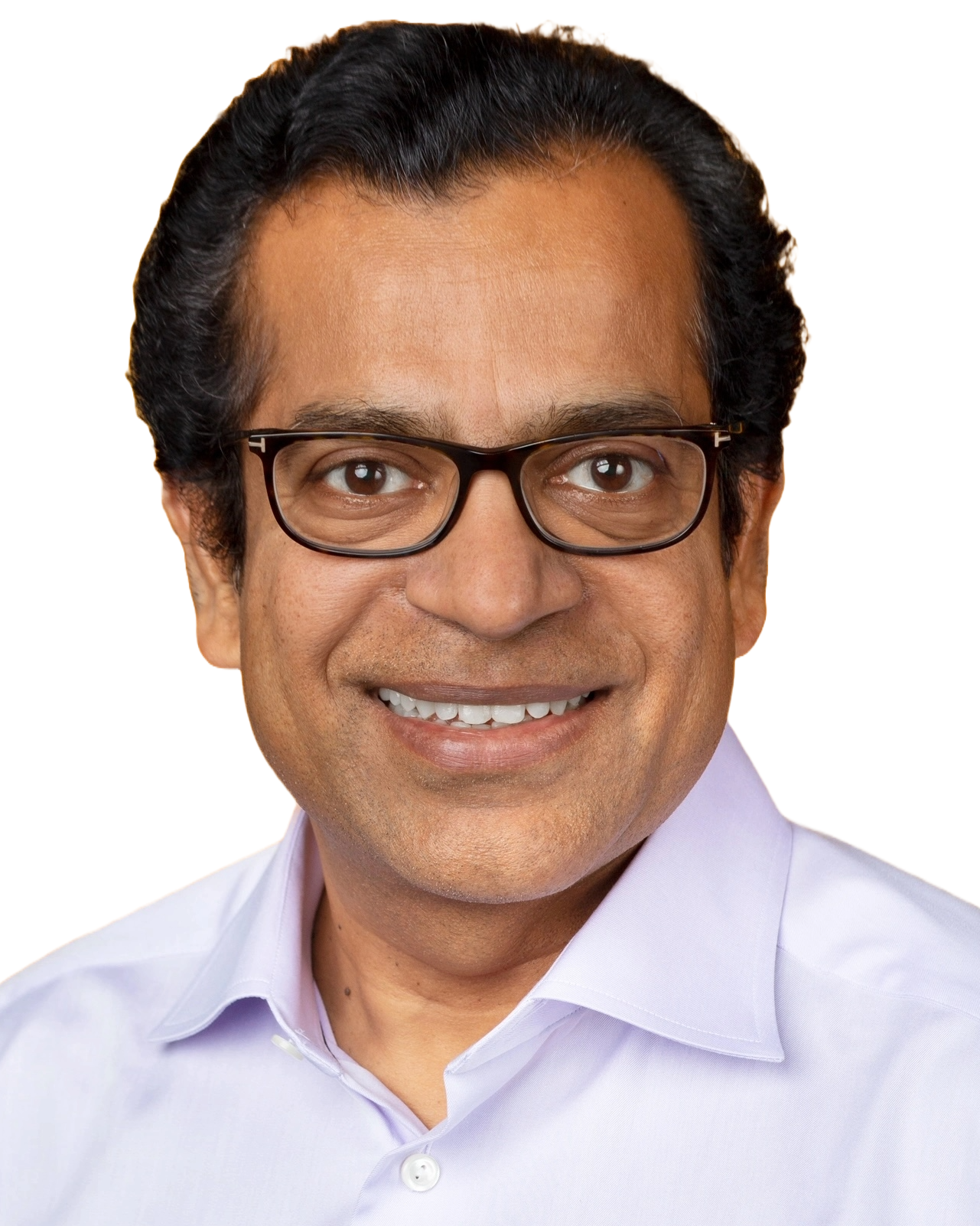
Sudhakar Ramakrishna
CEO, SolarWinds
Sudhakar Ramakrishna is the CEO of SolarWinds, where he led a remarkable turnaround following the 2020 cyber attack on the company. His career spans senior product and leadership roles at 3Com, Motorola, Polycom, Citrix, and Pulse Secure, with a consistent focus on helping people communicate, collaborate, and be more productive. He is known for blending deep product expertise with a values-driven leadership style centered on transparency, humility, and customer obsession.
· 42 min
Sudhakar shares hard-won lessons on leading a company through an existential crisis, including the five principles he used to rebuild customer trust at SolarWinds: transparency, urgency, communication, collaboration, and humility. He breaks down the paradoxes product leaders must hold simultaneously, from confidence and humility to fearing disruption while believing you understand the customer best. Senior PMs and product leaders will learn how to execute a value model transition rather than just a business model transition, how to align portfolio, go-to-market, and financial goals in concert, and why time to value should be a first-class product metric.
- Book The Alchemist — Paulo Coelho
Sudhakar calls it an evergreen wonder he has reread many times, fitting his stubborn optimism.
- Book Humankind: A Hopeful History — Rutger Bregman
A recent read that reinforces his optimistic view of people and history.
- Book Team of Rivals: The Political Genius of Abraham Lincoln — Doris Kearns Goodwin
He highlights it as a biography and celebration of Lincoln, aligned with his love of history, patterns, and leadership lessons.
Rahul Abhyankar [00:00] Hello listeners, I am your host, Rahul Abhyankar. My guest in this first episode of Season 3 is Sudhakar Ramakrishna, Chief Executive Officer of SolarWinds. Sudhakar became CEO at a very pivotal moment in the company's history, just after it became the target of a cyber attack that affected not just SolarWinds but its large base of enterprise and government customers. Since then, Sudhakar and the people at SolarWinds have led a remarkable turnaround. We are going to learn about how they did that. Sudhakar's journey has taken him from VP Product Management at 3Com, General Manager at Motorola, President at Polycom, General Manager at Citrix, CEO of Pulse Secure and now CEO of SolarWinds. We cover many important topics in this episode: leading through a crisis, paradoxes in product management, transitioning from a perpetual business model to subscription, and many more. All companies have purpose and mission statements, but for Sudhakar, these are not just sentences on a website. They permeate through everything from the product portfolio, priorities, go-to-market and the value that the company delivers to customers.
Let's dive right in.
Sudhakar, welcome to Product Leader's Journey. I'm really excited to have you on the show.
Sudhakar Ramakrishna [01:32] Thank you, Rahul. Happy to be here with you.
Rahul Abhyankar [01:40] I want to start with perhaps a topic that has been beaten to death: the cyber attack that happened on SolarWinds. This happened fourth quarter of 2020, towards the end of the year. You were yet to step into the CEO role. In fact, you were supposed to take on a CEO maybe a little over a month after that attack. I don't know how many CEOs start day one with a full-blown crisis on their hands. I just want to go back in time to that moment when you learned about the attack, when you were still not with the company, and then how did that shape your view of coming into this company and taking that forward?
Sudhakar Ramakrishna [02:13] I was officially about to take on the role as CEO at SolarWinds when I heard about this. The first thought is what could have happened and how might you start dealing with it? But as you can imagine, before I took on the role and as I was discussing with the company, I started laying out a set of priorities. These are the things I would like to start working on as I took on the business. But when something like this happens, all those priorities have to take a backseat, and this became the forefront. I really looked at it as an opportunity to serve, because I don't believe that it was the fault of the company that somebody attacked it. All you can do is improve. I look at these opportunities as an opportunity to learn, do something, serve, leverage your experience and give something back.
Rahul Abhyankar [03:12] One thing I want to go back to. From Q4 2020 to Q4 2021, one year post that attack, the maintenance renewal rate fell about five percentage points. So that's a significant loss of revenue. And then you had a strong recovery after that and now coming back upwards of 95%, which is fantastic. But back to that point when you were losing that renewal business from customers, give us a feel for that recovery into customer renewals.
Sudhakar Ramakrishna [03:46] Rahul, what I can say is that in many ways, we are lucky because we have a very loyal set of customers and partners, and I am personally lucky because there's a very dedicated team at SolarWinds who cares deeply about customer success. So I had two fantastic ingredients to work with. But when we went through 2021, it wasn't an easy thing to do. As you said, losing that many customers and that much revenue can be nerve-wracking. But I have faith that if we continue doing the basics right and accept ownership regardless of why something happened, who did what—it doesn't matter—take ownership and solve it, then customers will eventually start coming back. And while we lost that many in 2021, even quarter after quarter we saw progress and improvement. So that builds momentum. That builds confidence. Today, the way I would describe it is we are known for what we have become, not so much what happened to us, and I attribute that, Rahul, to a relentless focus on customers and addressing the issue. One of the first things I built was this notion of secure by design. There was a blog post I wrote two days after I joined, still on our website, that described the principles by which we are going to become more secure by design. I'm really proud of the journey that we put our company on and, as a result, put the industry on as well.
The way we approached this was we went back to some very foundational principles that I believe in. One is customers like transparency. What do you know about the issue? What happened, how are you solving it? What is next? So relentless transparency.
Two is urgency. Of course, they want to understand your understanding of what happened, but then what are you doing about it? How are you showing progress? So demonstrate urgency.
Three is communicate. A lot of times we are doing things, but we are not projecting it. So communicate what you know, what you don't, what you're doing next.
The fourth aspect of it is collaborate. Collaborate with authorities, regulators, industry. My network expanded significantly and has continued to stay that way, because now, when people have issues, they call me for how do you deal with this, what do you do here, etc.
And then the last but not least is the humility aspect of it. When I say humility, it's about learning, it's about doing and it's about accepting that you don't know everything, but you will strive to learn as many things as we possibly can. If you can wrap all of these and be consistent, I believe, regardless of the business, regardless of the industry, if you lose customers through a crisis, they will come back to you.
Rahul Abhyankar [06:37] There is an element of why let a crisis go to waste, and when you have that way of looking at things and the transformation that happens as a result of that which clearly you've done at SolarWinds, that kind of transformation, who knows if it might have happened as part of the normal course of business? So the crisis in fact acts as a catalyst for some next-level change and transformation to happen.
Sudhakar Ramakrishna [07:00] You're absolutely right. First things first is that I don't wish this on anyone. That being said, I will say personally for me what it did was it allowed me to learn about more people at SolarWinds much faster than I normally would have. You're thrown into the fray. There's everyone there and everyone is equal, because we are all trying to solve the problem together.
I got to know the business much faster. I got to know the people much faster. I got to understand strengths, weaknesses, opportunities much quicker, so that enabled us to start moving forward faster. The primary focus was: while we were dealing with a crisis, how do we bottle up the positives and then inject them into the future? I would say we've been able to do quite a bit of it. Otherwise, we would not be in the position we are in today, where we are growing. We have transformed largely our product portfolio, we have transformed largely our business model, and our profitability is pretty much at an all-time high. These are not things that happen on a daily basis.
Rahul Abhyankar [08:12] That's fantastic and I love what you said about we are known for what we have become and not what happened to us. I think that's just a very powerful statement, not just in terms of our professional lives and companies and what companies go through, but just individually and personally. I think that applies very well as well.
Sudhakar Ramakrishna [08:32] Some of these experiences can be nerve-wracking. So while I may seem very calm right now, going through this is not an easy thing to do. But I think we need to go back to the core principles of who you are, what you want to become, what you learn from this and what defines you. One of the key things that we continue to emphasize every single day is, for me, it is incredibly important that we be good versus just look good. That could be about a product. That could be about a product experience. That could be about an engagement with a customer. That could be in financials. Doesn't matter. I think if you can stick to those core principles and work on first principles all the time, good things will eventually happen is kind of the mindset.
Rahul Abhyankar [09:15] Beautiful. I want to go back to 3Com and US Robotics. You joined 3Com through the acquisition of US Robotics and then you were responsible for the Huawei 3Com joint venture. I can imagine that managing a portfolio and roadmaps and execution in one company is challenging as it is, but then to do that for a joint venture. So I'm curious to understand, how do you manage a portfolio for a joint venture? The resources, investments, roadmap, customers—give us a sense of that.
Sudhakar Ramakrishna [09:49] Oh yeah, that was, I would say, one of my more fascinating experiences in my career, Rahul, and that's also an experience that I would not trade for any other experience that I've had in my life, because it was unique in many different ways—global, multicultural, first of its kind, all the cultural dynamics, all of the issues around the two nations, all of that stuff. So my responsibility was to run the product management or portfolio for the joint team. The way the deal was structured was that as part of the joint venture, we got engineers or commitment for 1,800 engineers from them, which instantly improved our engineering team size. The uniqueness of it was we had some really talented engineers, but I would say most of them did not really understand product or offerings, but they were very good at understanding tasks and getting things done. The customer orientation for them was at a completely different level.
I would get asked the question by the engineers saying what is the role of product management here? We will simply do what the customer wants. They may say something today, we'll get it done. They may say something else tomorrow, we'll get it done. But there was a tremendous amount of simplicity and speed in their mindset. In that world, first and foremost, impressing upon them that while we may have gotten 1,800 resources or engineers, it's not unconstrained, so there's always constraints. And then there's the notion of prioritization, sequencing, discipline and so on. That took a lot of effort and through that process we not only built a completely new portfolio that is still today very successful in the marketplace and has continued to expand, and it was very exciting to blend some very contrarian ideas with some very traditional ideas and make progress. I've been very lucky with various and varying experiences in my life. I'm also lucky to say that some of those people are still working with me today, 15 years later. So I take these relationships forward and I wouldn't be anything without their collective contributions.
Rahul Abhyankar [12:16] And then you were at Polycom as president and Citrix as general manager.
Sudhakar Ramakrishna [12:20] Yes. You do have a certain path you lay yourself out into. You will have a perspective on where you're going. In terms of the various companies I started working in—call it networking software, distributed system software, etc.—that was because I enjoyed it as a graduate student, as a researcher, so I started doing that. Over time, I started thinking—all of us do that—which is, what's your purpose? I said, okay, I'm helping people connect through my work.
As I progressed, I was more looking at how do I help people communicate better together. That's where voice technologies came into play, video technologies came into play, etc. And then further I said, okay, if you help them communicate and connect, how do you help them collaborate and be more productive? So the way I would like to think of my journey is focus on things that helps people communicate better together, collaborate better together and be productive. If through your work you can help them do that, it's very fulfilling. And then, as I came into SolarWinds, we took it one step further and we defined the purpose statement of SolarWinds in the following way.
I said, can we be a company that enriches the lives of the people we serve? There is a product connotation, there is a customer success connotation, and enrichment is a very personal thing and you're connecting with them. If you're a customer of mine, if through SolarWinds software, I'm able to give you back 10 hours of a week because you don't have to spend that time debugging something or isolating an issue or fixing an issue because the software is doing it for you, then we have enriched your life, because those five hours you could probably spend taking a child to a soccer practice game, or take care of an elderly family member, or use that time to learn the next new skill. That's enriching to me. That same thing can be applied to enriching a salesperson, a partner, an employee, any number of things. So that's the purpose of SolarWinds. My journey has been more around communication, collaboration, productivity and hopefully now to help enrich the community that we serve.
Rahul Abhyankar [14:39] I like the way you describe the purpose. But if I could just poke a little bit into it, is that not a little too generic? Because Facebook could make the same statement.
Sudhakar Ramakrishna [14:49] Absolutely. You have a purpose, but with context, and you can absolutely poke into it. I can say our purpose is to enrich the lives of the people we serve. Where it gets even more specific is from there you start talking about your mission and from there you talk about your priorities and your portfolio, and then, of course, your engagement with your customers and partners.
Rahul Abhyankar [15:13] Wonderful. I want to come to SolarWinds, but before that I want to pick up on one other thing that you said. You mentioned a couple of times humility, how other people have contributed to everything that you've been able to achieve. I go back to when I first overlapped a little bit with you at Pulse Secure, where you were the CEO. I was struck by your simplicity and humility, and again that humility comes out in our conversation right now as well. It also struck me that humility says I'm aware that I don't know everything, and conviction says I have a strong feeling, a strong intent of where things need to be. So how do you balance these aspects of humility and conviction?
Sudhakar Ramakrishna [15:54] Absolutely, and I appreciate you mentioning that. You build a certain set of behavioral values over time, and one of the behavioral values that I believe in is balance—confidence and humility—having both. You might think of some of these as paradoxes, and we can talk about that too. The way to think about this is if you're going into a game, you better not enter a game unless you believe you're going to win.
And so you have to have that conviction and you have to have that belief system. But equally, if you do not believe that you're going to continue to improve, which is where the humility dimension comes in. Humility, to me, just is not a matter of behavior or a kind of demeanor, I should say. It's a matter of learning, improving, sometimes taking feedback, which could be brutal, or self-assessing yourself, which is what did I do right, what can I do better, etc. To me, that allows you to be even more confident, because the idea is, when you're confident, you're still going to make mistakes, but if you have the other side of it, you know you're going to learn, correct, improve and probably you'll be right the next time. So that's a balance that I would highlight, as seems like a paradox, but I think it can be achieved. Another thing, if I can say it, as it relates to running teams, running portfolios, running organizations. Another behavioral aspect I focus on is what I call challenging and supporting simultaneously, which is I have to challenge you to become better, you have to challenge me to become better.
We all have to become better so that we can serve our customers better and then the company benefits.
But let's not make a mistake of who you're supporting. You're all in the same boat together. So sometimes when you're challenging, it feels like, hey, do you support me? That's never the question or the issue. I always say I'm going to support you, but I'm going to stretch you to become better and I expect you to stretch me to become better. And so that ties back to that humility piece, which is, if you stretch me, I'm learning and I'm continuously improving. That then makes me confident.
Rahul Abhyankar [18:03] That's great. Thanks for clarifying that in a beautiful way. I want to go a little bit into this topic of paradoxes that you mentioned, because in product development we encounter many paradoxes, seeming paradoxes that we tend to conflict and have to choose between. Can you talk a little bit more about the paradoxes in product?
Sudhakar Ramakrishna [18:24] Yeah, product development, product management. If you think about the role of a product manager, nobody reports to that person, but the person is responsible for the success of a product. You're still accountable when something goes wrong. Everyone is looking at you, and then everyone is looking to you for direction as well. So I'll explain one paradox that I think a product manager needs to think about.
A product manager's mentality has to be: how do I wake up every morning worrying about who's going to eat my lunch and therefore put me into a state of irrelevancy, but then, on the flip side, equally believe that I'm going to understand the customer requirement better than anyone and serve them better than anyone, and be comfortable with both those feelings at the same time? Because if you only have the second one and ignore the first one, you could be blindsided. But if you're paralyzed into inaction, worrying about the first one, you will never move, and then it becomes a self-fulfilling prophecy at that point. So that's kind of a paradox in your head that you have to resolve and still be comfortable. And then you need to translate that into a set of priorities, actions, behaviors, motivations that then cause your product development teams, marketing teams, sales teams, partners to all be orchestrated and affecting a value chain for the customer. So that's an incredibly powerful option. That's simply one paradox that a product manager has to resolve.
Rahul Abhyankar [19:57] I think this topic of paradoxes in product management—you've touched upon something that rarely gets talked about in the way that you talked about it, because the ability to be comfortable with contrasting, with opposites and even feeling those opposite emotions and being comfortable with those—one thing that's coming out is there are things that apply professionally and how we present ourselves at work and the work we do, but these are also things that are extremely important for any person's individual personal life and growth as well.
Sudhakar Ramakrishna [20:31] Absolutely. I believe I've said this many times to my teams. Product management is as much about people management, if not more about people management than product management, because you're bringing together constituents with different experiences and expertise. It could be marketing, it could be engineering, it could be sales, or the partner community or the ecosystem. They all come with rich experiences.
They all come with their own biases as well in many ways, and your job is to bring all of them together, orchestrate and still have the conviction, the expertise, the confidence to define their priorities when no one is responsible to you in kind of a very direct way. But you show accountability to them and you command accountability from them—not demand it, but command it. Command it because of who you are, number one; how you engage, number two; what you define, number three; and how you translate that definition into their specific actions and create a shared success. So nowhere in that have I used the word product.
That's the way I would think about a greater level of product management.
Rahul Abhyankar [21:51] Awesome. Let's come to SolarWinds. Obviously, SolarWinds has been on this journey of shifting towards a subscription business model. There's another thing that you have talked about in addition to that business model transition. You call it a value model transition. Explain this concept of value model and how does that relate to a business model?
Sudhakar Ramakrishna [22:14] Sure, absolutely. About three years ago, as I entered the business, SolarWinds is like many traditional software companies. We sold perpetual software, we then maintained it, etc. Nothing earth shattering from a business model. Of course the world is moving towards cloud, SaaS, subscription, ratable and so on and so forth. As part of our strategy, we need to do something along those lines. So subscription first was one of the imperatives that I've established for our business.
But if you always start thinking about what are customers paying for and why should they pay for what you're asking them to pay for? Just because you want to move to a subscription model doesn't mean that customer has to change their mindset. So we started thinking about what is the right way to take them on this journey. There are companies that have said, hey, starting tomorrow, we are not selling perpetual. Anybody who wants to do business with us goes to subscription. That's one way to do it. But our thought process was, in taking the customer through the journey, can we show them greater value that prompts them to say, yes, I want to do this, versus they're doing it because I've changed my business model? That's the point I make about the value model transition.
SolarWinds historically sold point products to customers to solve a problem. Could be in network monitoring, could be in application monitoring, systems storage monitoring, didn't matter. What we then said was, knowing where the world is going, customer environments are becoming much more complex and, most importantly, customer budgets are not growing commensurate to the complexity that they are incurring. So those are the customer trends. Now overlay your purpose on top of that, which is you're trying to enrich their lives, which is what? Improve their productivity.
So we said, can our portfolio and product portfolio map those values, versus saying just cheap and cheerful or simplicity or any one of those types of things? So we transformed our product portfolio into, first, hybrid cloud observability, which was a product that we came out with in April of 2022. Two years later, we are at a $100 million run rate, which is a fairly tremendous speed. But the approach we took to selling that was to our existing customers. Go to them and say, hey, you may be a maintenance customer on network performance monitoring. How about if you consider hybrid cloud observability, which will help you consolidate your tools, improve your productivity, make it drop dead simple to procure and puts you on a cloud journey as you migrate your workloads? That was the value model shift.
Rahul Abhyankar [25:05] So there is an element of bringing additional value, including that value in that portfolio for the customer.
Sudhakar Ramakrishna [25:12] Absolutely. It's not a flip switch. But when we do that and you make it compelling for the customer, what we have experienced is they pay more, we become more relevant to them and it contributes to our growth. But the foundation of all of these actions was: what new value are we delivering to the customer and how would you articulate that simply? And how do you stay true to the values of SolarWinds?
Rahul Abhyankar [25:39] As you go on that transition of business model, what you typically expect is when you go from perpetual to subscription, in the short term there is a loss of revenue, a dip in revenue, but then you are creating more value and expecting to be compensated for it. So again, it seems like a paradox. Talk about that.
Sudhakar Ramakrishna [25:59] You're absolutely right. In most conventional business, when you move from perpetual to subscription, you go through a trough. The reason why I believe it need not be the case is if you exercise a value model transformation like we did, we are not selling like for like. We are selling unlike for like, based on your emerging needs. Consequently, what happens in our case, Rahul, as we have reported, is for every dollar of maintenance that we are giving up, we are gaining $1.6 of subscription.
If you think about it, that is then contributing to us not having to go through that revenue dip. Whereas if we had given up a dollar of maintenance and maybe just got a dollar of subscription, or let's call it, in some cases, 80 cents of subscription that many companies have experienced, we would have gone through that revenue drop. So that's why I think it's important. Every company has its own requirements, demands, needs, etc. and capabilities. In our case, we were able to create a model where we were able to build a lot more value and command a multiple, and that allowed us to transform the business without losing sight of growth.
Rahul Abhyankar [27:20] That's awesome. A part of that value model transition—you mentioned point products and the industry has gone through this aspect of best of breed point products versus the best of suite. The best of suite is sort of, on one hand, you could say it's a packaging pricing kind of exercise—lower total cost of ownership for the customer. But it should not remain just a marketing packaging pricing exercise.
It needs to clearly have that suite better together kind of a value proposition. And now you're going from best of suite to platform, where that value is even further realized as part of the deployment, the ownership of that platform and everything that gets integrated into it. So when you go from this point product to best of suite to platform, there is an element of looking at the industry and saying, this is a very fragmented space.
Sudhakar Ramakrishna [28:20] How do you look at, again, a paradox of fragmented versus winner takes all, the aspect of what's your role in this industry as a consolidator, which you have to be, as part of a—just call it good, better, best packages—and say that the customer should buy it, but there's no integration, there's no simplicity. As you think about consolidated versus consolidated, it is a matter of, I would look at it as a unification of experiences. Let's take it to the visibility challenge that customers have. What's happening today is they have a number of assets all over the place. In this world, what's happening is customers are suffering from a visibility challenge. What do I see? Where do I see it? Do I need to apply different tools for different clouds and so on and so forth? So a vendor such as us that can unify their visibility, create a common pane of glass, which is often overused—those are the foundations that you can explain to customers when you think about it, versus this marketing kind of approach or brand of, hey, I'm a tool today, I'm a platform tomorrow, or I'm a suite. That's not the idea here.
Rahul Abhyankar [29:57] Sudhakar, I have listened to some of your earnings calls and your investor presentations, like the Morgan Stanley conference and so on, and one thing that has come across to me that is a takeaway is there's a slide that you talk about a two-year roadmap. There's a portfolio, go-to-market and financial goals and objectives for the next two to three years.
Obviously, a lot of effort goes into creating that one slide that represents all of that, but there is an element of how the portfolio evolves, how the go-to-market strategy evolves and the financial goals and objectives for over the next two to three years. So in your view, what's the chicken and the egg here?
Sudhakar Ramakrishna [30:39] I don't know if I would characterize it as a chicken or the egg, but the point you made is very appropriate, which is we need to move the various functions in concert. You cannot move the product function—let's say, going back to the point we were just discussing about point products to best of suite to platform—the marketing motions, the selling motions all have to evolve, because you could have one set of behaviors when you do point products, but when you are evolving to platform, it's a different set of behaviors. We need to enable, we need to teach, we need to educate, we need to measure.
So which comes first? I will always start with: ultimately, your offering comes first. Your offering to a customer comes first. Notice that I'm not saying just product. Product is a part of your offering.
And then, as you build out that offering, which includes a product, it could be a set of services on top of that, a set of engagements on top of that, and how you approach the customer—that is the most foundational thing that you can create. Then at that time, you need to be having a very strong sense for what are the best practices in the market in terms of reaching customers. So there was a time, for instance, digital paid ads—that's the way you reach customers, because they look at the web, they click on it, etc. Today, the world has clearly gone to more organic search, so you're being found rather than searched, so to speak, in a different way. You need to change how you build content, project content and reach customers as well.
And then the conversations that you're having with customers, going back to the value model transition, is all about their problems, their pain points and what we're doing. Even previously that was the case, but in the past it was about, I'll help you manage your network better. Now, how about I improve your productivity better, reduce your complexity in a faster way? The conversation has changed, so you've got to evolve all three dimensions.
Rahul Abhyankar [32:53] One thing that I found interesting across that roadmap, you talk about product-led growth in a sector which is IT infrastructure, where you don't typically see those types of sales motions. To understand, what are you taking from the B2C companies in terms of product-led growth, e-commerce, but then bringing that into the IT infrastructure sale, if you will?
Sudhakar Ramakrishna [33:21] All of us have heard and used the term consumerization of IT.
We use it very glibly and state it and move on, and sometimes we go and pay attention to, let's say, a user interface or a widget or any of those things, but rarely are we truly thinking about the entire customer life cycle and the buying journey and the adoption journey and the usage journey. So concepts like PLG, e-commerce integration, all of those things are really about taking it to that level of simplification of the experience. Ultimately, what are we trying to do? What can you do to simplify the customer's experience? Number one.
And then, broadly speaking, the thing that we are trying to achieve from a SolarWinds standpoint is when a customer places a bet on us, what is the fastest time that they can get value from us? So time to value is a very important dimension. In fact, we measure it—my customer success team, my customer teams—we measure it, because the more we can improve customers' time to value, the more useful and relevant we become to them. And so if you think about PLG, if you think about e-commerce and so on and so forth, they're all part of that value chain of delivering a superior experience and a faster value to a customer.
Rahul Abhyankar [34:40] I think that distinction of time to value is really important, because we generally talk about value propositions, creating features and capabilities to enhance that value proposition, but how soon can customers actually realize that value? That also is something that needs to be created in the product, and I think that's a huge distinction for people to keep in mind.
Sudhakar Ramakrishna [35:06] And we talk about innovation, we talk about creativity. There is a conventional wisdom that says enterprise software and IT infrastructure can be complex. It is complex. There's environments and ecosystems that are tough, etc., etc., etc., but we don't ask enough times as to why it is the case, why it has to be the case and what do we need to do about it. I'll submit that those are questions that we ask ourselves on a regular basis and we are making progress towards it.
Rahul Abhyankar [35:35] Nice. Sudhakar, one thing that I've heard you talk about is this internal initiative called Accelerate, to drive cross-functional innovation initiatives. Tell us about that. How can other companies, other teams, benefit from what you're doing at SolarWinds?
Sudhakar Ramakrishna [35:52] I'm sure every company has its own flavor of Accelerate, and by the way, Rahul, our discussion is timely because we just finished our annual Accelerate. I call it celebration because teams from all over the company come together. They come with super creative ideas and then they get to project their presentations to the company. The reason why we call it Accelerate is squarely tying it back to our mission, and if you read our mission, it says our mission is to help customers accelerate business transformations through simple, powerful solutions built for hybrid and multi-cloud.
So we try to drive that theme into the Accelerate initiative. The way that judges ask every team to focus on their initiatives are: how is it improving anything that they do? It could be internal or external customer. How is it improving time to value for them? How are you staying true to our CARE values? CARE is our value system for SolarWinds. That is the litmus test that each of the creators of the Accelerate groups, which are cross-functional in nature, have to support. So this is a great way for us not only to accelerate—no pun intended—our work and innovations, but also unify teams, drive a consistent common set of values and build momentum. So that's our annual event.
Rahul Abhyankar [37:21] Interesting. So this is like an internal shark tank.
Sudhakar Ramakrishna [37:24] Not quite a shark tank, because there are no sharks at SolarWinds.
Rahul Abhyankar [37:31] What I mean is there is funding that comes out of it as a result of that, and then there are self-organizing teams that have come together in a cross-functional manner to champion a particular idea and bring it in front of the panel and get it funded.
Sudhakar Ramakrishna [37:46] Yes, and we provide commitment, we provide sponsors, and it's not necessarily a funding thing, because not just the winners get funded. Sometimes an initiative which might be 69th on a list of 70 initiatives can also get funded. So in that regard, it's not similar to a shark tank.
Rahul Abhyankar [38:06] Got it. Very cool. Sudhakar, I'm respectful of your time, but maybe just one question—any books that you would recommend, that have really touched you, that you think everyone should read?
Sudhakar Ramakrishna [38:17] I'm a big fan of history and patterns and paradigms and lessons that history has taught us, and I've also been a big fan of books that are focused on, let's say, self-improvement and call it optimism.
I would say I am a stubborn optimist when it comes to everything and anything in life, and so books that reinforce my biases, let's call it, on that front are appealing to me. A few books I'll mention that I really enjoyed recently. One is The Alchemist, which is an evergreen wonder. I've read it and reread it and so on and so forth. Another beautiful book called Humankind that I read more recently. And if I were to pick another book, there's a beautiful book called Team of Rivals. It was a biography and a celebration of Abraham Lincoln. I think those are three books that come to mind immediately.
Rahul Abhyankar [39:18] This is great. I've also heard about you talking about a book club. How do you find the time to do that?
Sudhakar Ramakrishna [39:25] I wouldn't say that I run a regular book club by any means, Rahul, but one example that I would give, which I'm particularly happy and proud of to be a participant in, is that when I was at Pulse, we used to engage with, broadly speaking, a telemarketing firm called Televerde. Televerde had a very unique business model, which was there was a social cause involved in their work as well, as much as there was a commercial cause. They were also helping inmates within the prison system of Arizona, where they are, I should say, to work with companies like ours, do productive work and prepare to graduate out of prison and become productive citizens. That was one of my most enriching experiences personally, to engage with them. At one time they were almost about 30, 35 of those inmates that were working for Pulse and for all intents and purposes, I considered them to be Pulse employees.
But there were restrictions and constraints. What can I do for them? I can't give them bonuses, I can't give them rewards, etc. But I thought, okay, I'll give them the gift of reading and the gift of learning. So what I decided to do was every quarter, I would send them books—like 35, 40 books of the same type. My expectation for them was that they would read it, they would write notes about it, and I committed that I'd go there every quarter and we would, of course, do business related meetings. But we'd spend the better part of an hour reviewing that book and it's fascinating for me in terms of learning from their experiences, learning from their questions and hopefully giving back a little bit through that as well. So that was my, I would say, only formal book club that I have run in my career.
Rahul Abhyankar [41:15] Beautiful. Well, thank you so much, Sudhakar. This has been an extremely insightful conversation and I really appreciate you taking the time out of your busy schedule to join us on this show and share so much.
Sudhakar Ramakrishna [41:27] Thank you, Rahul. Thank you for doing great work and projecting and proliferating the art and science of product management and portfolio management. Thank you.
Rahul Abhyankar [41:37] Hi there, this is Rahul Abhyankar. Hope you enjoyed listening to this episode. You will find the notes at productleadersjourney.com. Subscribe to the podcast and if you like it, share it with your friends and colleagues. See you soon.