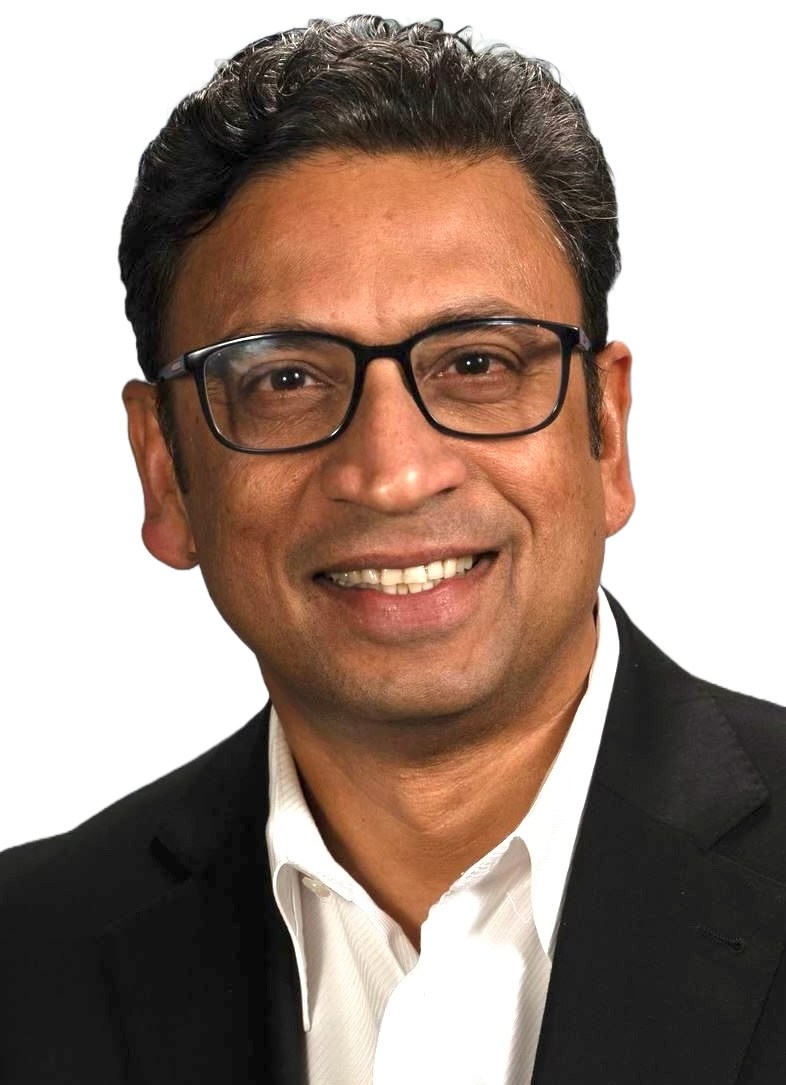
Himanshu Palsule
CEO, Cornerstone
Himanshu Palsule is the CEO of Cornerstone, a global learning and workforce agility platform serving 125 million users. He began his career as a hardware engineer in Bombay in the late 1980s and progressed through engineering, R&D, product, marketing, and C-level roles, including CPO, CTO, and President at scaled global companies such as Sage. He brings a rare combination of deep technical roots and executive scale to conversations about leadership, customer obsession, and the future of work.
· 42 min
Himanshu shares what actually changes as you climb from IC to CEO: the gap between saying 'I don't know' and following up shrinks, every word carries weight, and authenticity beats reinvention. He offers a practical mental model of control, influence, and interest to help product leaders focus their energy, and explains why losing a customer should feel like losing a dog. Senior PMs will walk away with a sharper view of customer centricity, storytelling as a leadership tool, and how to stay future-ready without letting their PowerPoint get ahead of their roadmap.
- Book Sapiens: A Brief History of Humankind — Yuval Noah Harari
Himanshu mentioned this as a recent fascinating read, reflecting his appetite for big-picture thinking about humanity and change.
- Book Anticancer: A New Way of Life — David Servan-Schreiber
He pointed to this book on his shelf as an example of his curiosity about where health and humanity are heading.
Rahul Abhyankar [00:02] Himanshu, when I look at your LinkedIn profile, I see almost a picture-perfect progression from individual contributor engineering roles to Director of R&D, SVP and GM, EVP, C-level roles, CPO, CTO, President and now CEO. How much of this was deliberate, well thought out versus serendipity?
Himanshu Palsule [00:28] I would love to tell people that back when I was 20, I had a mentor. I sat down with a mentor and they perfectly charted a course out for me. That isn't true. As with every career, I think you first need to assess what your own potential is. That's based on your personality, that's based on your ability and, frankly, that's based on your agility to adapt to changing conditions.
A lot of what came my way was opportunistic, and I have great stories where timing was important. You could even call it there were elements of luck, but what I always had—and I think I got this from my father—was an ambition that was always burning deep inside. So the ability to say yes to a challenge, even if it was slightly outside your comfort zone or, in some cases, completely outside my comfort zone, I think was a big catalyst in allowing me to do whatever I've done. As either young leaders or established leaders, always know what your North Star is. What is it that you're all about? Is it altruism? Is it imbibing a corporate culture? Is it working for global companies? Is it being functional, a specialist or a generalist? When you start getting an idea about what that is, then have the grit and determination to pursue it and then take some risk.
Rahul Abhyankar [02:00] That's interesting because that requires an amount of introspection, reflection, self-awareness. So how have you been able to become self-aware?
Himanshu Palsule [02:11] That's a great question, Rahul, and I wish there was an easy answer. Some of it is, especially early in your career, it's just dumb confidence. It's the fact that even if you fail, it's going to be okay. As they say, failure is not falling down, failure is the unwillingness to get up and then run even harder. So there's some amount of reflection, there's some amount of grit and determination. It's important you have a strong ecosystem around you of people you trust, people who are going to be there for you. In my case, it was my wife who supported me through all these crazy travels that we've done around the world. And then just a willingness to take a risk and fail. And then learn, get up and run harder.
Rahul Abhyankar [02:55] There is a quote by Leonardo DiCaprio: every next level of your life will demand a new you. So as you went through, successively progressing through all these leadership roles, was there an element of you reflecting and saying, okay, what's the new Himanshu that I need to be to meet this opportunity?
Himanshu Palsule [03:16] There is a risk in that quote. The important thing is it's the new you, it's not the new somebody else. I was reporting to a French CEO at one point, and his advice to me was learn to live within your own skin, regardless of how much you have to rebrand yourself. How much technology have we witnessed changing? How many business models have changed? But that level of authenticity on who you are, you learn very quickly that you cannot fake it.
If you're an introvert, you cannot pretend to be an extrovert. If you're a thoughtful, analytical person, you cannot try to make on-the-spur decisions and live with them. If you're a person who values feedback and collaboration and that's how you make decisions, you cannot isolate yourself and make decisions just because somebody else was doing that, just because somebody else was successful. And we've had a list of those successful leaders in our industry—some extreme extroverts, some very intelligent introverts. You, at the end of the day, have to define who you are.
At the same time, I think you have to be insanely curious if you want to adapt and be agile. I really mean insanely curious. You've got to be able to understand. The world talks about prompt engineering. It didn't exist a few years ago. So then really diving in deep and learning about it. It's easy to do that today with all the devices and social information available, but the way you keep recalibrating yourself is have that level of honesty, authenticity and curiosity that has to guide you at all times.
And, as you said earlier, a lot of self-reflection. In the world of artificial intelligence, I ask myself every day, how much of this is purposeful to my business versus something that's of interest that I'm going to read about? Somebody taught me this moniker long ago: if you take three concentric circles, control is in the center, influence is the second one and then interest is the third one. Oftentimes we drive very quickly to interest. And then you realize, if you can control it or influence it, what is the point spending all your calories in building that level of interest? But that's what you have to decipher as you go through the journey.
Rahul Abhyankar [05:42] I love the perspective that you brought about what does the new you mean, and the visual about the concentric circles—control, influence and interest.
Himanshu Palsule [05:54] I've been in meetings that have drawn those circles. I've said this is control, this is influence, this is interest. And you, Mr. Product Manager, are over here, so you are not even in the zip code of ideas. It's a very straightforward, simple rubric. There's more complicated ways to diagnose problems, but it's important in today's world where everything seems to be shiny and important and it may not be relevant to you. And the risk is you cannot lock yourself in. The level of interest has to be there. But then have accelerators, have incubators, have labs where you're delving into interest, and then have someone understand whether that has an impact on your business or not. So you cannot ignore them. That's how we got into things like spatial learning. Two years ago I had written it up, I had completely ignored it, and then today, when I look around, you realize that that thing is going from an area of interest to an area of influence.
Rahul Abhyankar [06:52] You went through these roles of increasing responsibility. There is an element of earning a seat at the table. So how did that become important and what did you have to do to prepare yourself?
Himanshu Palsule [07:05] I learned a lot and I made a lot of mistakes. I unfortunately didn't have a solid mentor at that time, so every time I was given a bigger role—at one point I was the EVP of marketing for a billion dollar company—with sort of that hotspot that of course I can do marketing, of course I can do sales, of course I can manage product. And then you realize, and that's a learning that stays with me today, that you are good at something. You are ultimately very good at one, two or maybe three things. You feel that you're intellectually capable of many things, but you're not.
When I worked at Sage, they had a general manager structure. We were a global company and there was about eight or 10 of us that would meet on a regular basis. And here I was, fearless, coming in from the Americas, and these meetings from all parts of the world. And then I got some great coaching. People said that when you speak it doesn't sound very authentic. It feels like you're always presenting, you're always posturing, you're always trying to speak on top of someone else. Bring in a dose of humility on how you connect, being self-aware at every point of the way. That doesn't mean you lose confidence and suddenly succumb to criticism, and that company particularly did a good job at sort of exposing you to a 360 on a very regular basis.
I learned that you are not the master of everything. You are successful by hiring people who are smarter than you. That period when I was in middle management was my inflection point, which I should have known because I've seen my father do it as an executive. Tremendous sense of humility and self-awareness, and that changed my path. You feel the loudest, the bravest, the most courageous are the ones who are always noticed and moved on. It is the most self-aware, adaptable and confident people who have a very strong inner voice who are the ones that make it big. And that was a learning. And I had a couple of leaders who were dead-on introverts that people really respected because when they spoke the whole room listened. That was a change that I had to also go through personally.
Rahul Abhyankar [09:22] As you rise up in the hierarchy in the organization, does it become easier or harder to say "I don't know," whether it's in employee town halls, in meetings with customers...
Himanshu Palsule [09:35] Or a board meeting.
Rahul Abhyankar [09:36] Or a board meeting. You see it from all sides.
Himanshu Palsule [09:39] Here is my realization. The first realization as a CEO, which is obvious, is there is no more escalations beyond you. So when I finally get called in a customer meeting and, let's say, a customer is unhappy or upset and they're bringing it to my attention, there is very little of "let me think about it, let me discuss it with someone and get back to you," because they've already discussed it with everyone and now they're coming to you for an answer. When the board asks you, should we do this or should we do that? Of course you're going to consult your team, but it is your decision. What you say matters.
As a CEO, I tell people every word is worth its weight in gold. Use it very sparingly. Don't waste narratives, don't waste ideas, don't waste words. As a result, saying "I don't know" becomes extremely crucial in this role. Unlike when you're moving up as an executive, as a middle manager, I always tell people, when I ask you a question, the answer is either yes, no or a number. Either yes, we are doing it, no, we are not doing it, or here is the data and I need to come back to it.
I think it's actually easier as a CEO looking at someone and saying I have no idea. A customer that day hit me with a problem and they went on to explain it and I said, Mr. Customer, I have no idea what that problem is. And then you better follow up and come back quickly. So it's easier. But the time between "I don't know" to "you better have an answer" is really small. You don't have the luxury to take months and say, hey, I sent that email and I never heard back, or people never got back to me, or I'm still waiting for an answer, because you shouldn't be waiting for an answer.
If it's important, you deserve the right to get an answer right away. So I think that's the balance. I would caution people never to go in pretending. In any scenario—could be an employee town hall and someone raises a question and says, hey, why did you take that benefit away? It's like, I don't know. I didn't know that benefit existed and I didn't know it got taken away. Let me find out and get back to you, and then narrow the time when you get an answer. Could be a customer or could be a board. In front of the board, I wouldn't advise doing too much of that. Don't make it a habit to say "I don't know," because then they'll find someone who knows. But at least be honest about it when you say it.
Rahul Abhyankar [12:00] That honesty, authentic vulnerability, but then the curiosity to be able to—like you said, I love what you said about reducing the gap between "I don't know" and follow up. I guess this is something that people at any level of the organization can embrace.
Himanshu Palsule [12:17] I think the metaphor people need to use is imagine you had a stopwatch in your hand and when you say "I don't know," you press the stopwatch and you hear it clicking. You hear it clicking as the day goes by, as the night goes by, and at some point you've got to look at the stopwatch and say it's clicking and I haven't done. So you have to be able to hit stop again, which means you have to come back with an answer. And customers really, really appreciate when you call them back and you say, I know I was supposed to get back to you today, I need 24 more hours, here is what I found out but I don't have the full answer. Some people just wait for the perfect answer, and sometimes that's much worse than having a good enough answer.
Rahul Abhyankar [13:01] Let's pull that thread with customers a little bit. It's almost become cliched for companies and leaders to say that they are customer obsessed. Throughout your career, what have been tangible ways to demonstrate that the company or the team is customer obsessed?
Himanshu Palsule [13:20] I think the biggest benefit I had, starting as a hardware engineer at a company in Bombay, India, back in 1986, 1987, we had some really large customers. We had customers like Brook Bond. We had customers like Hindustan Aeronautics Limited, and they had made these purchases of these big mainframe systems. You walked in with your toolkit and oscilloscope. You walked into these beautiful EDP centers with air conditioning, which was rare back then, and when you walked in, customers oftentimes literally would close the door, pull a chair and say, neither you and I leave till you repair this damn system. That is the heart of customer centricity. Through those glass doors you would have the entire EDP organization watching you while you're debugging a chip or you've got your oscilloscope, you're soldering something.
It gets worse when you start working with small customers and they start sharing their pains with you. I remember the scientific lab in Bangalore and the person there said, I will lose my job if you don't repair this machine. I have two kids at home. We have to get this job done today. The empathy is not just about the textbook empathy on "the customer is always right." The customer and you had a bond when they bought that software from you, or they bought the device from you, or they bought that equipment from you, and you break that bond every time something goes wrong.
I'll tell you a quick story, Rahul. This is one of life's inflection points to me. I won't name the customer, but you can imagine—manufacturers are the biggest ice coolers in the US. Every ice cooler, every thermos is managed by this company. The CEO of that company called my CEO then and me for this meeting. In the morning we got in the car, we drove there. Relationships were good. He leaned over to me specifically and looked at me, and I'm pretty sure he had tears in his eyes, and he said, you let me down. You personally let me down because the system still has problems. It was about five or six years ago. We're going to have to fire you as a vendor, but it's not just about the business. It's about, I trusted you and you let me down.
Now, look, I had an organization of 3,000 people behind me. We should have read the signs and all of that, but at that point I was the universe of one. I was the person he was speaking with and he had reached out. He had put his hand on my shoulder and said, our contract ends. It was a quiet car drive back to the office, and then we called a meeting and then we told people what happened. Here is the name of this customer that everybody knows, in America at least. We just let a customer down. Do you know how that feels? It's not about, did we go through the punch list, did we have the weekly calls, did we meet the KPIs, the metrics? Actually we were. We were having those calls and we were making progress. We didn't realize what went wrong.
And on the flip side, when the people at AstraZeneca and Johnson & Johnson call us today and say, thank you for helping us accelerate modern medicine and vaccine with your learning modules, those things matter. Those are the things that make you customer obsessed because they impact you, they change how you make decisions going forward. If every employee feels that way—I say, if I may, losing a customer should feel like losing a dog. It's got to hurt. It's got a feeling that something had to terribly go wrong for you to have lost that customer. And what did you do wrong? If you feel that, and then you celebrate the big wins you have, you're high fiving people. When someone is successful—we just have a large retailer, one of the largest in the US, that went live and they sent a short note on how successful they were, and you just celebrate the heck out of it. That's customer culture. It's not dashboards and television screens. We don't have those anymore with metrics that are flashed. It's got to be soul.
I was at a bank on the East Coast and halfway through the meeting the lady said, can we go downstairs and can I show you what I mean, because you don't seem to understand. I said, let's go. We went down, went to her cubicle, she fired up her machine and she had post-its all over her monitor and she said, to go from here to here, I have to follow these four post-its. I made a phone call saying, folks, and I took a picture. I put it up in my office and we had a little ceremony I think about six months ago, and we actually took that down because I told my team this picture doesn't come down until we solve this problem.
You can't have, in today's world of smart intelligence systems, little sticky notes telling a user how they use the system. It's got to be intuitive. That's what I love about my job. I'm talking to a 30-year-old undergrad who's taken up a job and who's an administrator of training, who's explaining to me what the problem is. And then I have the CHRO of a billion-dollar company talking about strategic skilling of their organization. There's no job—
Rahul Abhyankar Yeah, there's no job.
Himanshu Palsule And then again, if you started with carrying a suitcase with an oscilloscope, soldering chips, you realize there is no job that's small enough or big enough for any leader to be willing to do.
Rahul Abhyankar [18:35] That was a beautiful story. I got goosebumps listening to that.
Himanshu Palsule [18:37] I still do, thinking about what could I have done differently?
Rahul Abhyankar [18:41] Because you are the CEO, you probably get to have a variety of different topics and conversations that most, say, product managers don't have the luxury to have. So how do you share your learnings from all these different meetings and conversations with the product teams?
Himanshu Palsule [18:59] When I first started, I was doing a video every week. Every Friday I was putting a quick three-minute video on a customer visit. Then I realized, firstly, that was too frequent. That meant I was not doing something else, and it was almost having a negative effect where everyone was sort of honing down on that customer because someone listening to that video was like, that's my customer, I better go solve for that.
The important learning there is when you talk, when you see something and you come back and report it—if there's a burning issue, you just call right away the right person and say, hey, did you know we run the risk because this person's having this issue. If there are general issues, what you have to report back are patterns and trends, saying, hey, the last three customers seem to really like these aspects and dislike those aspects. What do you see? So now I do monthly videos. We do a bi-monthly all-hands meeting, a video meeting, just like this. We have a very similar setup and I'll either have the head of products or the head of sales or head of people asking me questions and we have a discussion. We use Slack a lot, so we have all these various groups on Slack and I'll go in and pose it. Or even before I go to a customer, I pose questions there saying, what do you all know about this and what can you help me with? So that collaboration has to happen at the same level within your organizations.
Of course, sometimes I come back and I'll tell an executive leadership team member who will tell the next, who will tell the next, who will go all the way down. In today's world, I don't think that's terribly efficient, and everyone needs to be comfortable with you reaching out to the point of impact. There was an interview from former President Barack Obama, and Barack Obama said, I would always look for that person in the White House who just got things done. They didn't know how they did it, they didn't know why they did it, they always got things done, and they're the people who moved up in their career because they stood out. GSD, let's just call it—Get Stuff Done—is a criteria. So that's how we communicate.
We collaborate a lot. We are pretty flat. Everyone says you're flat, but being flat means you've got to invest time, because oftentimes you can't just lob something over and forget about it. They have a point of view, they've done everything on their side, and now you need to understand that and maybe go back to the customer and communicate that the customer was wrong. I don't believe that as a CEO you can sort of make these Hail Mary passes every day and then go to the next customer. It's pointless. You just cause a lot of confusion. Do I do it? Of course, I fall victim to it, especially if you're meeting an important customer, but you have to be very mindful of the downstream impact that you're having.
Rahul Abhyankar [21:47] When you talked about flattening the org chart—well, the org chart is a tool, it exists for valid reasons, but you also don't want the communication in the organization restricted to the lines on the org chart or follow the lines on the org chart. I have this interesting story that I read. Michael Lewis, who's the author of Moneyball, has this article where he talks about the experts in an organization, in any company, in any complex organization, are usually six levels deep in the org chart, and they are not vocal, they are not advertising their expertise, but they are the people who know what's broken, who know what can fix it. But that rarely reaches the level-one employee, which you are. As the CEO, it rarely reaches the top. So when you think about flattening the org chart, how do you see, as the level-one employee, bridging that gap between you and the level-six employee that's the hidden expert in the basement, if you will?
Himanshu Palsule [22:54] And it's become way more difficult with remote work. We don't even have the water cooler anymore, where you run into those people who just look at you and say, hey, by the way, do you have a minute? I want to tell you something. So you have to create that environment and you have to create that metaphor for that conversation to happen. The best lesson I learned early in my career is leaders need to be storytellers. The way you're going to win the hearts and minds of people at any organization is you're going to tell stories that resonate to them, and listening to that story should prompt someone to become part of that story. You have a protagonist, you have an antagonist, you have a plot, you have a beginning, you have a middle, you have an end to a story. These are typically stories in our industry or customer or markets. You need to be able to light that spark. And by no means am I saying I'm necessarily great at that, but you need to at least try to light that spark where someone's listening to the story and looks at it and says, I want to be part of that story and I want to contribute to that story. That's a soft skill that goes beyond...
Of course, we have town halls, we have skip-level meetings. Anytime I visit a campus, I like to meet with groups of employees that are randomly chosen and we just start a conversation. We buy lunch or whatever and say, how are things going? Introduce yourself, what's top of mind. Stop by cubicles and all of that. So there's no one way to do it, and it is very hard, especially if you're spread across the globe, time zones, everyone's working from home. How do you do that? But the best instrument as a CEO that you have to try to reach all the way down is be an authentic storyteller.
And then, of course, I have AsktheCEO@cornerstone.com. They post questions. When they post it, you better reply to it quickly. And then, of course, we do engagement surveys and all of that. So I will say it's a journey. You're never done, you're always getting better. I made my share of mistakes, I still do. When you have the engagement survey, read every single comment, as painful as it is. If there's a comment that says Himanshu is clueless about this, you better read it and you better understand what that means, because the first reaction is, this person has no idea what I do. Well, of course they don't, but maybe it's your job to allow them to understand what that is. So I don't know if I answered it, Rahul, but it's a variety of things, but you've got to make an attempt.
Rahul Abhyankar [25:26] I think there is also an element of the level-six person—six levels down in the org chart—having the voice and the agency to be able to give that feedback and say the things that they truly want to say. In your example, if people are indeed saying Himanshu doesn't have a clue, then that's a culture where people have that voice and that agency, which is a testament to the culture of the company.
Himanshu Palsule [25:50] And that's the important word there—culture. My definition of culture is, what do people do when no one is noticing what they're doing? You're in there on a Saturday all by yourself, the office is dark, you're working. Do you actually care at that point about the organization? If you do, your company has a great culture. If you're coming there because somebody dragged you over there and you're just waiting to go back home, then that's a different culture.
Rahul Abhyankar [26:14] So from accounting, ERP to training and learning as CEO at Cornerstone OnDemand—very different industry, very different problem space. What's a mental model that you have to observe and look at an industry, understand that industry and the problems in that domain, and what analysis did you go through to say yes to this opportunity?
Himanshu Palsule [26:36] Great question, Rahul. At every point in your journey, as you move, you have to define what is the purpose of your job. Is the purpose to make money, to gain equity? Is the purpose to learn something? Is it a stepping stone to my next job? Is it an industry that's exciting and on fire and all my friends work there, so I want to go work there? You've got to know that.
I reached a point in my career where I knew I probably had enough gas in the tank, but I wasn't at the point where I'm crawling up corporate ladders anymore. So when I started looking for a role as a CEO, I had three conditions I had laid for myself. The first one was purpose. At this point, you look at leaving a legacy behind. So what is the purpose that excites you? I had an opportunity for a good legal software company. My purpose wasn't making lawyers successful, and it may be for others. At that point it wasn't for me. I had an opportunity at a payment processor. My purpose wasn't dwelling in millions of transactions and eking out efficiency at that point. So when this company that had a grand vision—Cornerstone, 125 million users, a course gets taken every three seconds, and the purpose was to educate every human being in a corporation in the world—now, that's a purpose that checked the box. I can get behind that.
The second is I wanted something with scale. I've always worked at scaled companies. We are now a billion-dollar company. I have learned how to scale scaled companies. I may not be successful at a small company.
The third thing I wanted was this role to be global. The world right now is just so uneven in how innovation is happening that it's exciting to be in a place, especially with learning, where countries like India are pouring millions and millions into skilling. Emerging geographies that are now like countries around China, Indonesia, Malaysia, Singapore, Hong Kong, doing that. I wanted that unevenness because it creates different greenfield opportunities.
And then I wanted a company that had a soul, and that was what I had to listen to. Of course, we all want to grow, and I want to grow even faster and be more successful, but at this point in my life, I want to really enjoy what I'm doing and work with people who have fun at doing what they're doing. So that was my criteria. This was the third opportunity that came in front of me. It was local here in Southern California where I live, so I just jumped on it saying, this is it. Life can get better than having a job as the CEO of Cornerstone.
Rahul Abhyankar [29:16] You talk about skills, learning, a future-ready workforce. Some time back, none of us were future-ready for generative AI—most of us. So how do you define future-ready? What does that mean to be future-ready?
Himanshu Palsule [29:33] The one thing as a company that we are realizing is there is a huge workforce readiness gap. In fact, next week I'm in Chicago and we're going to launch a new category for our company that's based on this understanding of the problem that, more and more, there is a gap between what companies think their employees are skilled at and what skills the employees think the company is giving them. And this gap continues to widen, and, unfortunately, artificial intelligence is just going to blow this gap away. There was a statistic where 95% of the employees felt it was important their companies are investing in AI and 5% of the companies thought that AI was something they would be investing in. Right or wrong, that's a gap, that's a skills gap. And our belief is, the way you solve that gap is through workforce agility. You create a learning culture, you create a culture with gigs, you create a culture of internal mobility. You create a culture where hackathons, where anyone can raise their hand, jump into an initiative for a period of time and then go back to their day job.
Unless you do all that, this workforce readiness gap—I have large customers, one of the largest retailers, who told me that they hire something like 60,000 people every quarter, and he has lost track completely of the skills of his organization. He couldn't tell, and this person was head of people. He didn't have the ability anymore to say where the skills sat, what are the new skills, what are the emerging skills. So then you need a platform that supports this sort of hire-to-retire journey. You need to be able to—and employees, and this is going to be the differentiation between highly successful employees and not—is they need to reach the organization halfway somewhere.
Learning is a two-way street now. This is no more a world of classroom training only. You're learning every day. You wake up in the morning and you start learning. So if you're curious, you want to learn. The organization is creating an agile environment for you. That is how you're going to prepare for the future, because we don't even know what those jobs are. You've seen the numbers—tens of thousands of new jobs will be created that don't even exist today. How do you plan for something that doesn't exist? Well, you create an agile workforce that has the spirit of learning embedded inside.
Rahul Abhyankar [31:57] A product manager listening to our conversation—a future-ready product manager. What would that look like?
Himanshu Palsule [32:04] I don't think there's an easy answer other than be very, very aware and surround yourself with information that's relevant about what the step change is coming up on. Oftentimes what happens is product managers linearly know exactly what's happening. They know who the competitor is, they have competitive intel. Then they know the next competitor, they know their roadmap and how it matches that. What you lose sight of is that left-field change that happened that fundamentally disrupted your industry.
We've heard those stories. We've heard Kodak, we've heard BlackBerry, we've heard Blockbuster. Those product managers exactly knew about unit sales, unit economics and all of that. What they missed was a new metaphor that was being created in their industry. If you are aware of that metaphor and you have an executive team that supports your nonlinear thinking and you have the ability—again, concentric circles—take that metaphor and bring it to an area of control and influence, you will be a successful product manager. Went to the COO or the CEO and gave his idea, and then he got chastised for thinking too much out of the box—he or she—and was told to go back and finish the roadmap that you're late on. You just took that spirit away of adventure. And it's true, you're so focused on in-quarter profits that you don't have time, as the larger you get, to think about those nimble competitors who are creating new industries.
Rahul Abhyankar [33:37] I think that aspect of making your customer future-ready through the trends that happen in the industry, through the trends that happen in technology—and I think you are doing this for your customers as part of their learning and skills—but this is an opportunity for every product manager to think about, what does it mean to make their customer future-ready?
Himanshu Palsule [33:58] Right. And the risk, the pitfall to watch out for, is don't let your PowerPoint get ahead of your roadmap by too much. It's very easy for you to stand up, talk about AI, talk about spatial learning, talk about ChatGPT, talk about all of that. You can get experts, you can do a panel, you can do a town hall. You can convince everyone. The dust settles, the cowboy rides off into the sunset, and a month later the customer says, what happened? The next time you come and give the same pitch and the next time you do that, customers are like, time out. You just lost me now because you have no credibility left. So the hard job—and that's why when I do, in fact, I'm doing a keynote next week—I will deliberately have a slide titled "What does the future look like?" And then I get into all that cool stuff. Because both for internal and external, I don't want that to be misunderstood as something that we're delivering next month or next quarter, because it sets an expectation that doesn't get met.
Rahul Abhyankar [34:55] You talked about prompt engineering. What's an interesting prompt that you've given to ChatGPT?
Himanshu Palsule [35:03] I use that a lot. Sometimes you cheat. You look at a new press release, you look at your marketing website, you look at product positioning, and then you type, ask ChatGPT, how would you position it? You've got to be careful not to take that and go. But I oftentimes get a chuckle on how sophisticated those systems are getting.
There's an interesting aspect that I learned: you spend so much money for customer intel. If I'm going to go meet a large customer, I talk to people, we download their company profile, we listen to their 10K, etc. Type in a prompt on how is company XYZ doing and what is their biggest problem. You will be surprised at how much information has been put out there that we don't even know. You will be surprised at whether they like something, don't like something, they're about to change something, they're about to—some product manager, someone has put something out there that gets read. So I get a chuckle before I meet customers saying, what are the top problems facing this customer? Or how is this customer creating a learning culture within their organization? Sometimes you won't get anything, but oftentimes it's like, wow, this is more than every bit of external research that was given to me. With Google search, you just are going to keep getting better at how prompts are going to work.
Rahul Abhyankar [36:29] That's very interesting, and I think that's a great opportunity for even product managers to say, what's the top three problems that this customer is facing?
Himanshu Palsule [36:40] They should try it. People listening to this show should go and type in the name of their customer that's probably been the most difficult and ask them, what are the top three problems plaguing this company, and see what they get. One of them could very well be an eye-opener to what they're solving for—not the product, but the situation.
Rahul Abhyankar [36:57] I'll ask you the cliched CEO question. What keeps you up at night?
Himanshu Palsule [37:01] Well, I don't sleep much. There's a lot that keeps me up at night. As I look at our market and our industry, as I look at where we are vis-à-vis competition, we're doing very well. We created this learning category. We are recreating it.
The thing I lose sleep on is, internally, are we doing everything to make our—we call them Cornerstars—our employee, to make our Cornerstars successful? Do they understand it? Do they believe in it? Are they behind it? Are they stretching themselves? There's work from home. What is their productivity level? Because no one's measuring it every day. It's going to come from the inside, and it starts with me.
So I genuinely worry about—we have 4,000 people around the world and we have a great vision, mission. We're going to come out, articulate a whole new vision next week in Chicago—stay tuned for what that is going to be. And if I lose sleep at night, it's like, is this going to resonate internally with my folks? Because externally, those PowerPoints are going to look awesome and our roadmaps are going to be great. I feel very, very confident we're going to reshape this industry. But is every person from Belgium to Bangalore to Boise, Idaho, behind this or not? And we have to spend time doing that. That is my number one issue today. That level-six person you said—he or she better be really excited about this, otherwise nothing's going to happen. And the rest of us can cheer all we want. The real work's getting done in the trenches.
Rahul Abhyankar [38:37] Who's been the most influential leader that you've come across, either directly worked with or maybe not worked with? What influenced you most about them?
Himanshu Palsule [38:47] Growing up, my dad was an executive at an automobile company, and I would follow him around, go to his office and watch how he did things and order stuff from the cafeteria and things like that, sit in this big swivel chair. So it was eight and ten years. What I observed with him is, as he moved up the ranks—and when he retired he was pretty senior—he always connected with that level-six person. In fact, when we moved from one city to another in India, the workers of that factory actually pushed the car for almost a mile, and I'll never forget that picture of their hands and faces of people crying pushing the car. That taught me a lot, that in India the lift operator is as important to the cafeteria person as your board member is. So he was always a mentor. I learned my courage and dynamism from my mom, but I learned humility and sincerity from my dad.
And then when you look at leaders, global leaders, I don't have one. There's a lot of them. There's obviously the obvious ones, like Steve Jobs, for crazy design thinking. There are others for just courageous decisions that were made. Obviously, coming from India, someone like Gandhi, who had the ability to say no, the courage to say no, which I think every leader needs. Reading his books and watching his films—it's hard. It's hard to say no to someone that basically rules you and commands everything from you, and be able to stand up to that. That was a learning. So there's no one thing. Everyone has strengths and weaknesses. Everyone has fallacies. I admire former President Barack Obama for what he represented, from where he started and what he achieved. Doesn't mean he made mistakes—this is not a political statement. It's a humanity statement of, have the courage to rise up and then take people with you in your journey. So that's been my journey, and I still continue to be fascinated by the leaders of our times, good and bad, and we will stop at that.
Rahul Abhyankar [40:53] Do you find time to read?
Himanshu Palsule [40:55] I love to read. I don't find it. My travel obviously is the time I read. But I think the problem with reading is when you have so little sleep and when you start reading on a plane, I just end up falling asleep. So that linear reading—I love books, I love the smell of books, I love flipping pages of the books. The linear reading is hard. So I read through devices, I read articles, I read blogs, I read samples and all of that. But if I can get my hands on a book, I love reading a book. I recently finished a book called Anarchy, which is just fascinating. I read Sapiens before that by Yuval. That was fascinating. There's a book right here—shows how diverse I can get—Anti-Cancer, and it's all about what is the world doing about cancer and where is health moving. I love that. So anything I can get my hands on. But time is always a challenge.
Rahul Abhyankar [41:54] Himanshu, this has been such an inspiring conversation. Thank you so much, and really appreciate you taking the time to be on Product Leader's Journey.
Himanshu Palsule [42:03] Of course. Thanks for what you do and keep doing what you're doing. It means a lot.