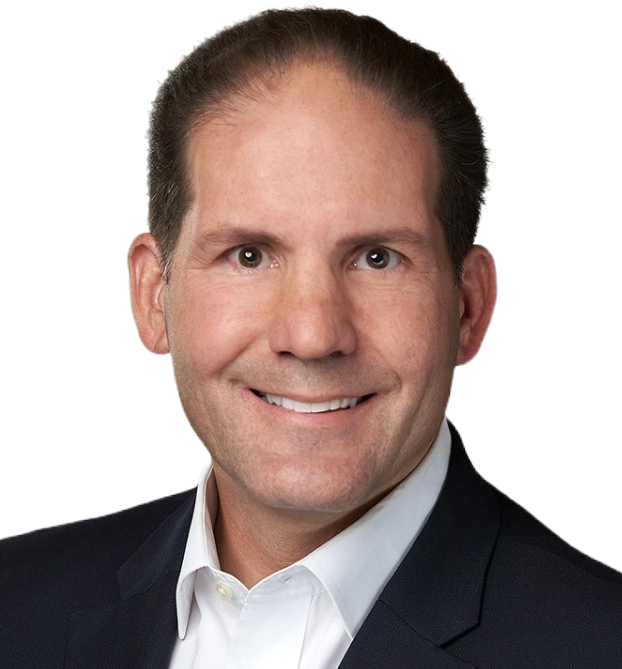
Don Weinstein
Former CPTO, ADP
Don Weinstein is the former Chief Product and Technology Officer at ADP, where he spent 17 years leading the company through major technology transitions including cloud, mobile, big data, and AI. He started his career at GE in the early 1990s and helped drive ADP's acquisition of the Marcus Buckingham Company, immersing himself in leadership development philosophy. Don has led large-scale product and engineering organizations globally and built internal training academies to upskill technologists at scale.
· 40 min
Don shares hard-won lessons from running combined product and technology at one of the largest HCM companies in the world. He explains how to drive technology transformations using lighthouse projects, what separates a product leader from a product manager using his three horizons framework, and why true product leaders work across all three horizons simultaneously. Listeners will walk away with practical techniques for building customer closeness in global product teams, evaluating which technology trends are worth betting on, and developing leadership through high integrity and authentic engagement.
- Book Team of Teams: New Rules of Engagement for a Complex World — General Stanley McChrystal
Don recommended this book for its insights on leading and influencing across matrix structures, and it inspired him to introduce cross-functional rotations between engineering, product, infrastructure, and general management in his organization.
- Book The World Is Flat: A Brief History of the Twenty-First Century — Thomas L. Friedman
Don referenced this book when discussing how talent is globally distributed and why the US and Western Europe have no monopoly on engineering and product capability.
Rahul Abhyankar [00:03] Welcome Dan. Thanks for taking the time.
Don Weinstein [00:06] My pleasure. Thanks for having me.
Rahul Abhyankar [00:08] Let's start at your role at ADP, Chief Product and Technology Officer. Historically, product management and engineering technology functions have been separate, led by separate leaders. How did your role come to be at ADP as a way of bringing these functions together?
Don Weinstein [00:28] Historically it had been separate at ADP as well. I've actually seen it both ways, where I've seen it separate and I've seen it together.
For us, we were trying to drive a lot of large-scale technology transformation in a hurry, and so from that perspective, I think we saw an advantage of having all of technology and product under one roof, just in order to drive strategy faster, remove some of the friction between the teams. Sometimes that friction can be a good thing in terms of putting checks and balances on the process, but also when you're trying to move fast, sometimes that can slow you down.
Either way, in large organizations, no matter how you carve up the organization, you need close collaboration between the technology team and the product team, regardless of whether it's a direct reporting relationship or it's matrix or something else. We had an expression there that good people will trump org structure. So whether it's direct this way and dotted that way, or vice versa, at the end of the day, it's all about getting really good people on board and getting them to work closely together. Org structures can change at any time.
Rahul Abhyankar [01:48] That's a great quote: good people trump org structure. You talked about driving technology transitions, and you've been at ADP for 17 years. One great thing about that is you've seen the organization go through these transitions—agile, cloud, mobile, big data, machine learning and AI. Tell us about your experience leading the company through these transitions and your learnings through that.
Don Weinstein [02:18] Technology cycles come and go. I've been around a little bit, so I'll go all the way back to the mainframe transition to client server, and then client server to SAS. The first thing I would make that point to say is this is nothing new. We've been through these cycles before and they happen. That's not to say that it's easy.
I think the key is trying to suss out which one of these new transitions is going to have real impact. Sometimes you can get a false positive signal out there. For instance, it feels like Gen AI and large language models are here to stay and will be a major impact. But it was only a few years ago that we were focusing on the metaverse. That's not to say that the metaverse isn't a thing and is not going to take over someday, but maybe that one's moving a little bit more slowly. So the first critical thing is being able to make the right calls and judgments on which of these technologies are really going to stick around and which of them might just be a flash in the pan, because those do happen.
Large scale technology changes are never easy. A lot of times what you'll see happen is some new startups will come in that are born natively on whatever the latest technology framework is, and it'll feel like they're moving at great speed, and that'll for sure be the case during the lifespan of that particular technology. But then these organizations have not been through transitions of their own, and so that's an organizational muscle that gets built.
The most successful ones we've undertaken are ones where the whole organization leans in, not just the technology organization. We need help from the client success organizations because typically there's some kind of—usually for the better, hopefully for the better if we've got a more modern technology framework that we're working with—but there is change, and change is never easy. Change in the clients, change in the client organization, change in the sales organization. Having been through these multiple times, any organization that has longevity will have been through that. That's the organizational muscle that you really need to build, much broader than just the technology team.
Rahul Abhyankar [04:51] Let's peel the onion a little bit on that. How do you go about doing that? There is an intent and a desire to make things happen in a certain direction, and there is a desired state, but then there are steps that you need to take to get there. If you take any one of these transitions, say agile or cloud, tell us a little bit behind the scenes of how that went and the challenges that came up, and how did you lead through those challenges?
Don Weinstein [05:24] The key thing in all of those, when you're talking about large organizations and large scale technology transformation, it's hard to bite it all off at once. Every single one of these that we've been through—and we've been through several of them, and they've been mostly successful—we always start out in a particular area and you're looking for those proof points.
The first key is not to try and do everything all at once. When you're operating at the scale that we're talking about—very large organization, many clients, many products, lots of technology to move—we try and identify a really good entry point and then use that both as a learning process and then, hopefully, if we have some success, as a rallying cry to point the way towards the rest of the organization. We use the term lighthouse projects. The lighthouse is what helps point you in the right direction and guide the way.
What I found happen, interestingly enough, usually when you're picking the right technology direction, the technologists will get on board really quickly because of course they want to be operating on the latest framework. They get excited about the new technologies that are coming down or even the new management systems like Agile. They tend to want to move quicker than the rest of the organization. So sometimes I have to harness all that energy, find a really good partner in the other side of the organization who likewise wants to be part of that leading edge, who's willing to go on that journey and blaze that trail and do that lighthouse program, and then when you have success, watch it go viral internally.
If there was one thing I would really point to, it's you can't bite it all off in one chunk. You have to pick the right area, the right program and the right leaders, both on the technology side and on the business side, who understand we're going to do something new here. It's going to be a little bit bumpy, but we think at the end it's going to be a success. And then that sort of shines the way for the rest of the organization, which is critical to get everybody on board.
Rahul Abhyankar [07:39] Over the course of these transitions, how did the organization itself evolve in terms of capabilities, new skillsets, talent? How did you plan through that transition?
Don Weinstein [07:50] In a large scale organization, just in the technology team, we had to do a tremendous amount of skills analysis and assessment, bringing in new folks. A few major transitions we've gone through just recently, like you talked about, public cloud, obviously had to make a lot of changes in the infrastructure organization. We effectively ended up building out our own, going towards more of a hybrid cloud or a multi-cloud model. Because, back to this premise, any organization that's been around for a long time is going to have a lot of technology. We're not going to transition it all at once.
Building through that, we brought in a lot of talent from the outside. But I also found, technology frameworks will evolve all the time and good technologists will just learn and adapt to the new latest and greatest if we give them the right environment. So we started our own internal in-house training academy and saw how a lot of people just voluntarily opted in and wanted to get on board with where the direction was going. Engineers are smart people. They can see where the technology is heading and they're very willing and able to learn and adapt.
By the way, I started out on mainframe and mid-range computers coding Fortran. I always joke, the languages and the frameworks people are using today are like child's play compared to what I had to start out with. So I think it's easy to get folks with the right mindset to give them the skill set. But we did make big investments in internal education and learning and training and built our own in-house academy, which is one of the nice things about when you're working in a larger organization—you have scale. You can do things like that. And everybody was super excited about making sure they want to keep their skills honed to the cutting edge.
Rahul Abhyankar [10:00] You mentioned about your early years starting out as an engineer, and along that journey, what were some of the key events where your thought processes and mental models around managing people and leadership got shaped?
Don Weinstein [10:18] I was lucky. I actually started my career at GE, and this was in the early 90s. GE was a leadership development factory. I was amazed at how much GE invested into people and talent at all levels. It was a good, eye-opening experience for me to get that kind of leadership development at a very young age. I felt very fortunate. I talked about the investments that we made into learning and development. It was one of my ways—I couldn't pay it back, but maybe paying it forward a little bit because I felt that it helped me so much. I wanted to bring that to bear.
The other thing—maybe this will sound corny, maybe it won't—but one of the things that gave me a great perspective on leadership and leading people is becoming a parent. I learned a lot about people and psychology and motivations by parenting my three kids.
One of the things about ADP that was interesting is we were in the business of people and leadership and talent development. One of the things I had done in the product role was help drive the acquisition of a leadership development company called the Marcus Buckingham Company. Marcus Buckingham was a thought leader in this topic area and had a very clear and, honestly, very scientifically objectively documented view around leadership: that the core of every leadership experience is the frontline leader and the relationship of an individual to their leader and then their immediate team around them. It makes sense in a variety of ways. It's a lot of good common sense, but we see, like many things that are common sense, that it doesn't get practiced in the real world. We hear this expression all the time: people join companies but they leave managers.
The core of it was, what does it mean to be a good leader? It's that frontline leader, that direct leadership responsibility. There's a few things in it. Number one, pay attention to people. I know that sounds basic, but how many times do you have one-on-ones with your direct report? Is it monthly? That means you're talking to somebody once a month. That's not a lot of attention. So more frequent interaction, light touch. The other thing that is really critical is making sure you understand people's strengths and put them in a position to help them succeed. As a leader, if you can do that, then you help your people be successful, and then they're going to get a lot of internal reward out of their work relationship.
I had an opportunity to really spend a lot of time understanding that philosophy, that strengths-based, hands-on leadership approach. So I had the benefit of, I guess, really three things. One is I experienced really good leadership development early in my career, so I had appreciation for it and I felt like I owed something back to the community. Number two, I worked in an organization that was actually in the business of developing leadership development and actually built products around it, so I had a chance to get really immersed in the philosophy.
But then what really brought it all home to me was my experience as a parent and seeing how many of these same concepts of being a good leader and being a good parent—paying attention to your team, pay attention to your family. Spend time with your team, spend time with your family. Get to know your team members as individuals and put them in positions to maximize their strengths. Same kind of thing you want to do as you're guiding your children through life. Sorry if it's a corny metaphor, but it applied in my situation.
Rahul Abhyankar [14:26] I think that's a great parallel. A lot of times what happens is, these words like management and leadership, we've heard them so much, but when you bring that home with a relatable example, then it really starts to sink in much better than just reading those words.
Don Weinstein [14:44] They're two different terms, management and leadership. Two different things. Somebody asked me once, what's my definition of a leader and how is that different from a manager? I said it's really simple. A leader has followers. Full stop. If you don't have any followers, then you're not a leader. So then the question is, why should anybody follow you?
A manager is different. A manager—that's an organizational construct. It's almost like consumer driven. Talk about the consumerization of products. It's the consumerization of management and leadership. The manager is top down. It's imposed from above and you have no choice. As an individual, you don't get a choice into your manager, but you do get a choice into who you follow.
As a leader, that whole concept of servant leadership, realizing that it's all about the people and the team and they get to decide who their leader is. You have to ask yourself the question, why should anybody be led by you? Having good role models for me in my career was also super beneficial in that capacity.
Rahul Abhyankar [16:00] I was going to ask you this question a little later, but since you brought it up, let me ask it now. Who have been your role models, people who've inspired you, leaders who've inspired you?
Don Weinstein [16:10] My most recent one—I was 17 years at ADP before recently retiring, and also our CEO, Carlos Rodriguez, recently retired. For sure he was a role model of mine, and in particular watching his evolution as a leader. The one thing he really brought to the front was you never come across a person of higher integrity. I think that's one of the most important things that leaders have to do.
Some people say, well, you need to be all warm and fuzzy and cozy and cuddly as a leader. Other people say, no, you need to maintain some separation. There are a lot of different leadership styles out there and any of them can work. But in Carlos's case, what he was is a high integrity, authentic person. When he said something, he meant it. I think that's the most important thing that was a role model for me. People want to know that when you tell them something, they can trust you. Trust and authenticity. That's the baseline. Without that, you don't have anything.
One of the things that's important as a leader, and what I saw in Carlos, is that super high integrity, that super high trust. That means when you commit to something, you follow through on it, but that you also have to be careful about not committing to something that you're not certain you can follow through on. When people learn that when you say something you mean it, that you have integrity, that they have trust, they'll follow you a long way. So he was a great role model for me in that regard.
Rahul Abhyankar [17:59] What you said about the difference between managing and being a leader—I felt that there was also a way to take that and apply to product managers and product leaders. How do you emphasize the aspect of product managers and product leaders being two different constructs?
Don Weinstein [18:20] And by the way, I'm glad you mentioned that. Product leadership can come from anywhere in the organization. Hopefully you've got a strong business function, and in many cases a really good business leader effectively can play that role of product leader. I had the title of Chief Product Officer of the company, but I would say Carlos the CEO, he's really the product leader. It has to be. It's like the thought leader for the organization sets the overall direction. Then we have to flesh that out, provide alternatives, etc. So that level of product leadership can come from anywhere. It can be at a business unit level, it can be at the executive level. It can sit outside, like the thought leader who sets the tone, sets the direction for where we want to go from a product perspective.
For a product manager who aspires into that, the key thing gets back to what we were describing at the start, which is you have to sit at the intersection of so many different constituent groups and needs. Effectively, that's what general management is. You have all kinds of functional management, and then general management sits on top of all those functions and integrates them together. Same thing from a product manager. That's a functional discipline.
A product leader is somebody who understands all those constituencies and can knit them together and find the right kind of optimal experience there. You're not trying to satisfy everybody. That's one of the areas where I see people go astray—you just want to satisfy everybody, you want to make everybody happy. First of all, that's impossible to do, and second of all, that's not leadership. That's effectively followership. You tell me what you want, that'll make you happy, and I'll go do that. Some people will certainly like that, but that's not really taking us in a new direction.
The product leader is somebody who has to really understand and have empathy for all of these different stakeholders, but you have to be very close with the client. In a B2B context, that's probably one of the areas I think it falls apart sometimes. As a product person in a B2B context, it can be harder to get that direct connection to the user. But if you really want to be the leader of the product—we talked about being a customer expert—as a product person, you have to be the person who understands the most and the best what's happening with the product in the wild. How are people using it? How are they experiencing it? What's working? What's not working? And making that the Rosetta Stone so that you can then take that, integrate all and spend time with all of your internal customers and your external customers, integrate that together and then strike a vision for what's the optimal path. Not just the one that says, hey, I'm going to take everybody's number one request and make that thing, but actually have a view of where we need to go with the product.
Here's an example. I always would talk about the three horizons of product management and where I see folks go wrong. Horizon one is the version of your product that is in market today, that is in the hands of your users, that people are using every single day, hopefully to get their jobs done. Horizon two is your near term roadmap. It's whatever is in the sprint release. You're writing stories, you're writing epics, you're burning down your backlog. You're working with engineering to get all the work done. Horizon three is what's that long-term vision for the product. Where do we think the market's going? Where's demand going? How are we going to get out in front of that?
The challenge I see at least what I've experienced across multiple organizations is, a true product leader, you need to be working across all three of those horizons. It's not that you want to spend your time equally—same thing like a good product roadmap, you don't want to just peanut butter your resources around everything. But you have to have a little bit of each, and it'll spike up and down depending on where you are in the life cycle of the product. In the early days, you're going to be heavy horizon three, a little bit horizon two, not as much one. And then as a product matures, that starts to balance a little bit, but always looking across all three horizons.
Where I see folks go astray is they tend to focus on just one or two. I've seen folks who consider themselves very strategic, meaning they're spending a lot of time on horizon three, some time on horizon two because you got to get the product out the door, but you're really neglecting horizon one, which is your customer. That's what we exist to do. In which case, you give up the leadership mantle. Or I've seen folks err in the opposite direction—great customer empathy, so you spend a lot of time on horizon one, then you end up kind of ferrying complaints back to engineering, so some time in horizon two, and at some point you almost become like a glorified super service rep, just jockeying customer support tickets back and forth between the customers and engineering, and you're neglecting horizon three. So you don't have a vision or an eye towards the future, and again, you voluntarily have given up the leadership mantle.
To get back to your question about what distinguishes a product leader versus a product manager, it's really those two things. One, you need to be able to connect all of the constituents together—technical, business, customer, you name it. And number two, you have to work across all three of those horizons. Not equally—depends on the lifecycle of the product—but you have to have certainly an eye towards all three. If you're not doing that, then you're just managing a backlog, playing a support role, or maybe you're a strategist, but you're not really a leader of the product itself, and that becomes a very tactical role.
Rahul Abhyankar [24:43] And then people wonder why they're not moving along their career path as quickly as others are.
Don Weinstein [24:51] Exactly. I think that's what distinguishes true product leaders from managers.
Rahul Abhyankar [24:58] Don, what you mentioned about general management—a natural career path progression for a lot of product leaders is to be the GM and own the business, the P&L and so on. But a lot of people see that as a title that I potentially can get to someday. They don't realize that they have the opportunity today to be the general manager in the context of the product that they are managing. The way you describe that, as sort of that overlay across all the different functions, it's not something that's being the GM, it's not something far off as a title to aspire to, but it's a role that people can play today.
Don Weinstein [25:43] That's right. Actually, I'm super proud of the fact that several of my product leaders—and I use the term leaders—actually went on to general management roles inside the company. You're 100% right because most people grow up in a functional environment. You're an engineer, you're sales, you're support, you're something. And in that environment, you're spending all of your time within that functional area, which is great for functional expertise, but it doesn't lay a foundation for general management.
Product is very unique in that respect. Yes, there is a functional aspect to product, but a good product leader is going to be cutting across the functions much more than probably any other functional role inside the organization. So you're 100% right. Done well, it is not just good training, I believe—now I'm biased as a product person, of course I'm 100% biased here—but I think it's the best training ground for future general managers is coming out of the product organization. And that is a career path that one could aspire to.
Rahul Abhyankar [26:52] Don, I'm having a deja vu as we are going through this conversation talking about product management. I don't know if you remember, but I'm going to take you about 10 years back. You and I met in your offices in New Jersey, and at that time I was VP of Product Management at McAfee and I was being recruited in your organization as a VP of Product Management at ADP. In that context, we met in your offices and you asked me about my views and philosophy on product management. And here we are 10 years later, having a conversation. I didn't get a chance to work with you. That didn't work out because I ended up moving to India and ended up spending a lot of time there, and I had the opportunity to meet with a lot of product folks in India.
How did product management grow up in India for ADP? And what have you seen in terms of making sure that product managers in the remote locations don't feel left out or cut off from the mothership? Talk to us about product management in India and ensuring that they have the customer context, the business context, and they're not just working with engineering in India, for example.
Don Weinstein [28:08] That is a great trip down memory lane, for sure. Unfortunately, we didn't get the chance to work together directly, but glad to have the opportunity to talk shop right now.
You talk about whether it's India—ADP very large presence in India—but there's also plenty of other remote locations around the world. I've seen a lot of growth in Eastern Europe, now has become very popular. A lot of growth in Latin America, becoming more and more. The first thing is there's great talent all over the world. I read a book 20 years ago from Thomas Friedman, The World is Flat. He basically predicted this. The US and Western Europe have no monopoly on talent, that's for sure. The question is how do you tap into it?
When I first came into the role, we'd been in India for 20 plus years and had a huge presence there. But I don't think we were optimal in terms of the way that we were leveraging that global talent pool. In particular, there was a term—I'll preface, I didn't really like the term, I never cared for the term and some people can find it a little off-putting, as did I, which is why I don't use it, but I'll share it now as an example. We used to use the term captive delivery center, or even the term offshore. Offshore kind of represents—well, then there's a difference, offshore, onshore. We're a global company. We had customers in 140 countries around the world. We're a global company.
So we changed our language. First we got rid of captive really fast, but then we got rid of the term offshore, because what is the shore when you're global? We just use the term global delivery center. We have a global delivery network, and in that network we have global delivery centers. We've got global delivery centers in India, we've got global delivery centers in Brazil, we have them in the US, Europe, you name it. Global delivery centers. Instantly just put everybody on equal footing. I think that's important. Language terminology is important. It shapes how you think. When you use terms like onshore and offshore, it creates some notion of difference. It's a global delivery center, all the same. First we're going to call them the same, then we're going to treat them the same.
Like a lot of organizations, at first we were leveraging some of these global centers as kind of staff aug. Probably one of the best examples where I think it wasn't staff aug, that they truly had a global mindset, was actually on the infrastructure side, because we're 24-7 and our customers are 24-7. We're just doing a follow-the-sun model. They had a very global mindset on the infrastructure side from day one. I said, we just need to take that same mindset and same model. How we do that is we don't do staff aug, we don't just use it as a super QA function, but putting in place intact delivery teams. If you're going to be a global delivery center, you need to have delivery teams. And an intact team has, of course, an engineer, QA, product—even UX has to be part of that intact team.
That was the key difference. Then we had to do a few things around that. One is when we started to re-architect our products, we modularized them so you could break off pieces of a product and give them to independent intact teams. We had good pipelines that we could leverage to merge everything together. So identifying which areas of the product are best managed in which parts of the world, and breaking off these fully intact modules effectively that could be built and delivered—again, I don't want to use the term remotely, just globally.
Our global products obviously we're great at that, our international products. But we did have a bigger footprint in the US, and so finding products that could be built out of anywhere in the world but focused on the US market, a little bit of a bigger challenge. Probably the biggest one gets back to what we were talking about before, which is closeness to the customer. That was one of the barriers we had to overcome internally, a mental barrier. Oh, you can't run that out of location X because the customer is here. Well, maybe that was true 20 or 30 years ago. In the modern world, the digital world, you could communicate with folks any time you want.
I started really just embedding basic techniques inside of the product teams in terms of how do you develop closeness with the customer when you're in a different time zone. That was probably the biggest barrier to overcome, both a mental barrier and a physical barrier, because once you do that, you establish that closeness to the customer, you can run the product from anywhere.
One of the easiest ways to do that was a digital technique. We put feedback on every page of our product. Anywhere in the application, if you have feedback, a rating, a suggestion, we drop that in. Our customers are doing that all the time. We just added something to that. When somebody takes the time to leave you feedback, we just drop a question in there: hey, would you like to talk to one of our product managers about your suggestion, yes or no?
Rahul Abhyankar [33:48] Yes or no.
Don Weinstein [33:49] Once we did that, because the folks who were remote were always saying, how do I get close to the customer? How do I get close to the customer? In the old days, it used to be easy. We do road shows, we do focus groups, we do customer briefings, et cetera, and then you'd meet the customers and have a rolodex of customers. Well, if I'm 7,000 miles away, that's not as easy.
Boom, digital channels, drop it in. You got a piece of feedback, you got a suggestion, you want to talk to the product manager? Would you like to join our digital focus group? And then you'd have the customer start opting in. By the way, that was so successful that of course we rolled it out. We got way more interaction that way than we did with any of the old analog versions.
Just really encourage the product teams to find clever ways to build interactions in one-to-one and one-to-many relationships with their customer groups. I found that the teams, they were really good at those horizons two and three. It was really that horizon one, that closeness to the customer. You instrumented the product, are you analyzing the utilization metrics?
I used to tell every one of my product folks, if you don't have at least a dozen customers on speed dial who you could call any time, that you could just say, I'm thinking about a product, I'm looking at a couple of trade-offs, I want to talk to a couple of customers—if you don't have a dozen customers on speed dial that you can go and ring up and say, what do you think, can I bounce an idea off you, that'll take your call, you're not doing the job right.
Rahul Abhyankar [35:24] Putting that opportunity for interaction right in the product and creating that dialogue between the customers and the product managers, no matter where they are in the world. That's really powerful. A lot of times what happens is product managers get brought into customer conversations by sales teams, and that's the channel that they are reliant upon to have that customer dialogue. To be able to have a direct relationship and a conversation is really important.
Don Weinstein [35:54] That's right. Especially in B2B organizations, like we said, there are often a lot of layers that sit between the product team and the customer, and you need to find ways to short-circuit those connections. Absolutely.
Rahul Abhyankar [36:08] Excellent. Just to ask you a couple of questions. A book that you have recommended or can't recommend enough to people?
Don Weinstein [36:16] Team of Teams. Are you familiar with that one? We talked about leadership, and probably that's another one where I got really good insight about leadership. Team of Teams, written by General Stanley McChrystal, who was the leader of special operations for the US military. What I didn't realize is that that was a matrix job. Each branch of the military has its own—the Navy has the SEALs and the Army has the Deltas and whatever—but those all report up vertically to the service line. The SEALs report to the head of the Navy.
The commander of the special ops, that was a matrix job. So it was interesting to see the whole point about leading and influencing. About good people helping work structure. Also has a lot of great tips and techniques about being a good leader. One of the things he talked about in there that I employed in my organization was rotations. I rotated people from engineering to product. I rotated people from development to infrastructure. And as we talked about, rotating people from product into general management. I think that was one of the big things I took away from that.
Rahul Abhyankar [37:32] And was the rotation for a specific period of time, or it was just a change of role completely?
Don Weinstein [37:38] A little bit of both. In some cases it was complete change of role, but in other cases it was with an eye towards, hey, it was a development move. You're a great engineer, you're looking to take the next step in your career journey. I think you would benefit by doing a rotation in product and then coming back, as an example.
Rahul Abhyankar [37:55] As we talked about horizon three and keeping an eye towards the future, what technology in horizon three that you are tracking, that you are excited about potentially in the future?
Don Weinstein [38:07] I think the metaverse is going to be a big thing. It's probably, like many technologies, it's going to take longer and it's going to go slower. The challenge that it had was it was probably too public too soon. There's always a model in product: what is it, under promise and over deliver? I think the metaverse came out a little bit over promised and under delivered in version one. But I think virtual worlds are going to be a huge thing. Augmented reality, in particular, is going to be big.
I've got my eye on that and I'm trying to figure out exactly what shape and what course it's going to play. That's the one that I think it's kind of moved to the back burner and it's been overshadowed by large language models. I actually think that's a good thing. Let it go to the back burner, keep working on it behind the scenes where nobody's paying attention to it, and then there are going to be some additional iterations that come out here that are going to blow people away.
Rahul Abhyankar [39:08] That's exciting—the development of avatars and our ability to interact with each other in the metaverse. And that's great for ADP, because then how do people get paid in the metaverse?
Don Weinstein [39:21] Exactly.
Rahul Abhyankar [39:22] Excellent. Well, thank you so much, Don. This was a really insightful conversation and I appreciate you taking the time. I know you just got back from an international, worldwide trip, so I appreciate the time and the wisdom that you've shared.
Don Weinstein [39:36] My pleasure, and it was great to reconnect with you, like you said, 10 years after the fact. So how wonderful to be able to reestablish the connection. Thank you so much.